 Visit Mexico City Guide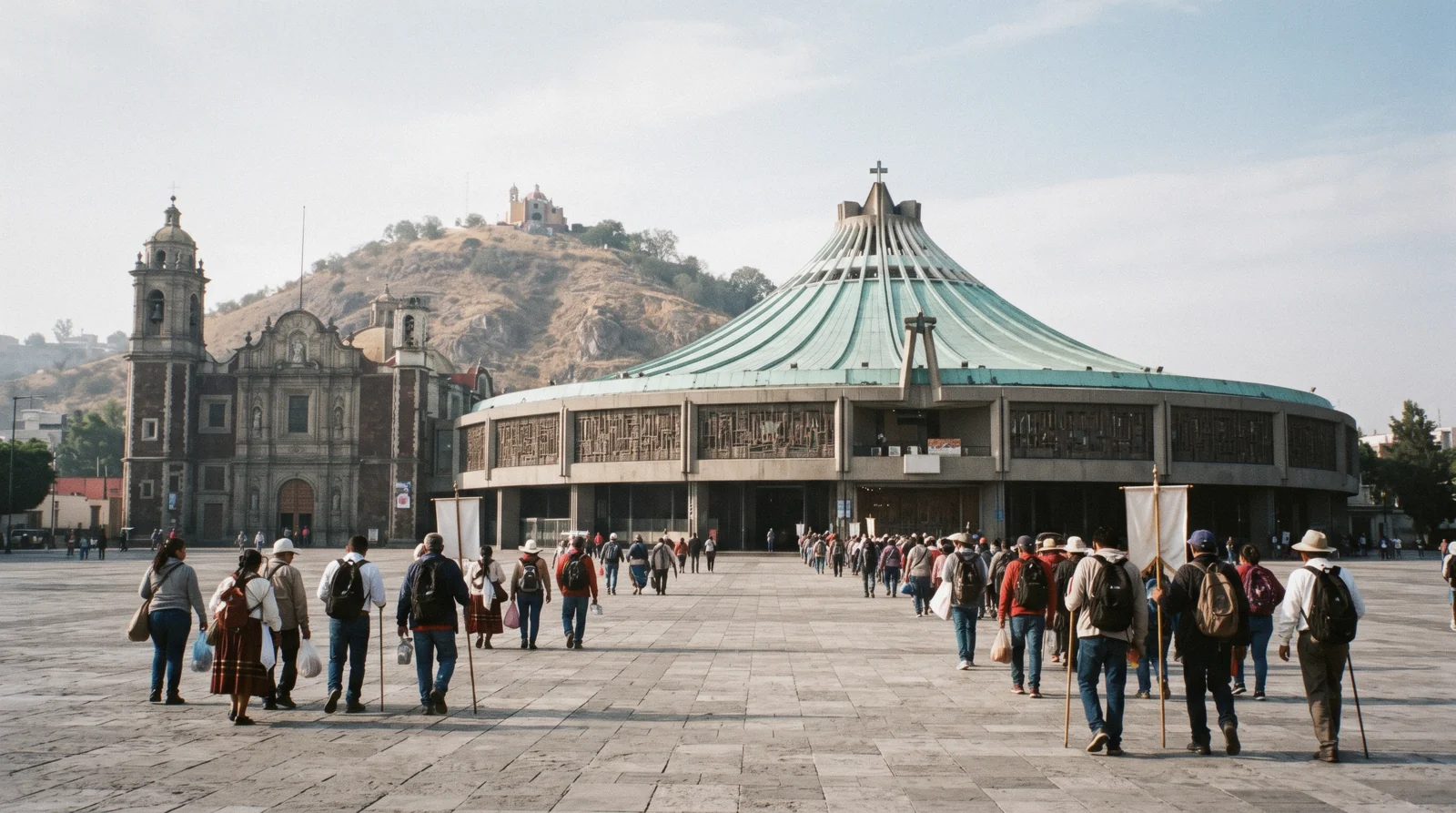
Basílica de Guadalupe
The Basílica de Guadalupe is the most visited Catholic shrine in the world outside Rome, and on 12 December it receives crowds counted in millions. It stands at the foot of Tepeyac hill in the north of the city, where a Nahua man called Juan Diego is said to have seen the Virgin in December 1531 and to have carried her image home on his cloak. The cloak — the tilma — hangs above the altar of the modern basilica, and a moving walkway passes beneath it, because standing still is not possible at the rate people arrive. Open every day, 06:00 to 21:00, and free.
Quick answer Free or not, what is on the site, and when not to come
Entry is free, and the shrine is open every day from 06:00 to 21:00. The site is a walled plaza holding six churches: the modern basilica of 1976 with the tilma above its altar, the old basilica of 1709 that is visibly sinking, and the chapels up Tepeyac hill behind them.
Key takeaways
- The tilma is seen from a moving walkway under the altar — you cannot stand in front of it, and the pass takes seconds
- Allow 90 minutes: the plaza, both basilicas, the walk up the hill and the view back over the city
- It is one of the few major sights open on a Monday, which is what puts it on the same day as Teotihuacán — most pyramid tours include it
- Avoid 11 and 12 December unless the pilgrimage is why you came: millions arrive and ordinary visiting stops
- It is one of the three places in this Mexico City guide that ignore the Monday closures
Key facts
Opening hours
| Daily, all year | 06:00–21:00 |
|---|---|
| Cripta Guadalupana | 09:00–17:00 |
Closed None
Planning it
- Time needed
- Not stated; our routing: 90 minutes for the plaza, both basilicas and the hill
- Book ahead
- Optional — walk-up usually fine
- Address
- Plaza de las Américas 1, Villa de Guadalupe, 07050 Ciudad de México
What It Costs To Visit
Nothing at the shrine itself. What is sold is the transport, and the tours that pair the basilica with Teotihuacán on the way north. Prices read on 30 August 2026.
| Option | Price | Includes | Cancel | Book |
|---|---|---|---|---|
| Walk-up visit | Free | All six churches, the plaza and the hill | No ticket exists | Official site |
| Teotihuacán and the Basílica, with lunch | Listed at $68 | Both sites, transport, guide, lunch | Free up to 24 hours before | Check Availability |
| Teotihuacán early access | Listed at $68 | The pyramids before the coaches; basilica not included | Free up to 24 hours before | Check Availability |
Metro La Villa-Basílica on Line 6 puts you three minutes from the gate for MX$5 on the operator's published tariff — the cheapest way here by a distance.
Tours That Include The Shrine
Almost every Teotihuacán day tour stops here on the way. Prices as listed on 30 August 2026.
 from $68
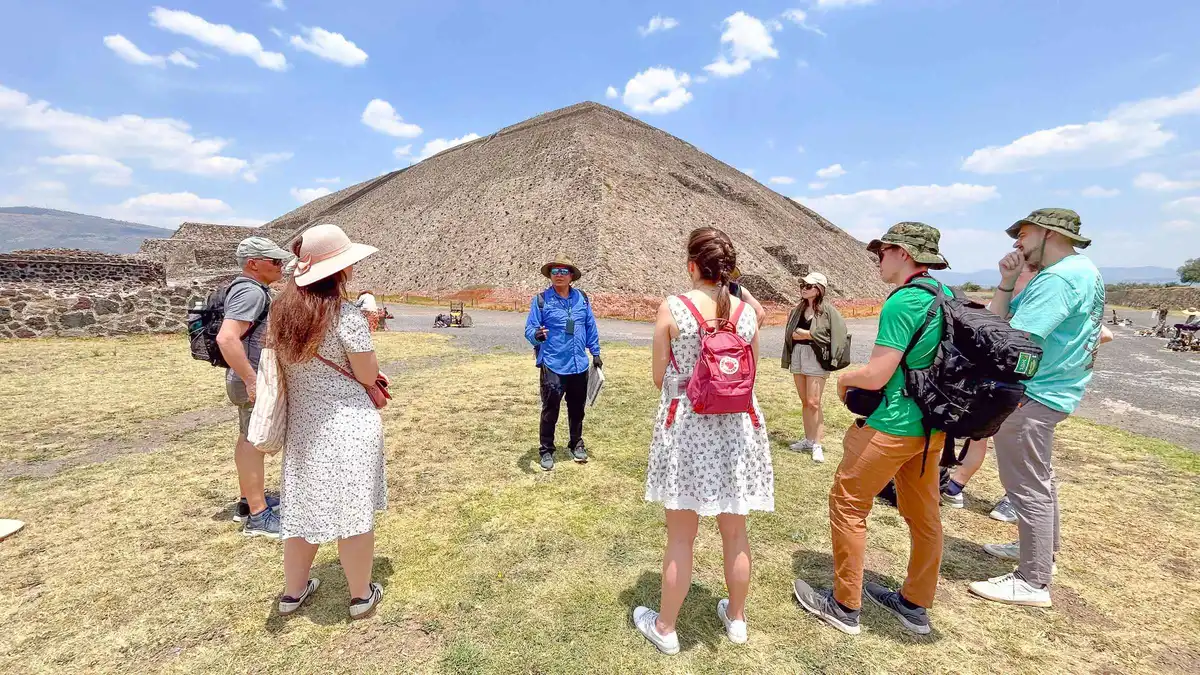
Mexico City: Teotihuacan & Guadalupe Shrine Tour with Lunch
Listing details checked 2026-08-30
Full day to the pyramids with the Basílica de Guadalupe and lunch — the version most first visits take.
Check Availability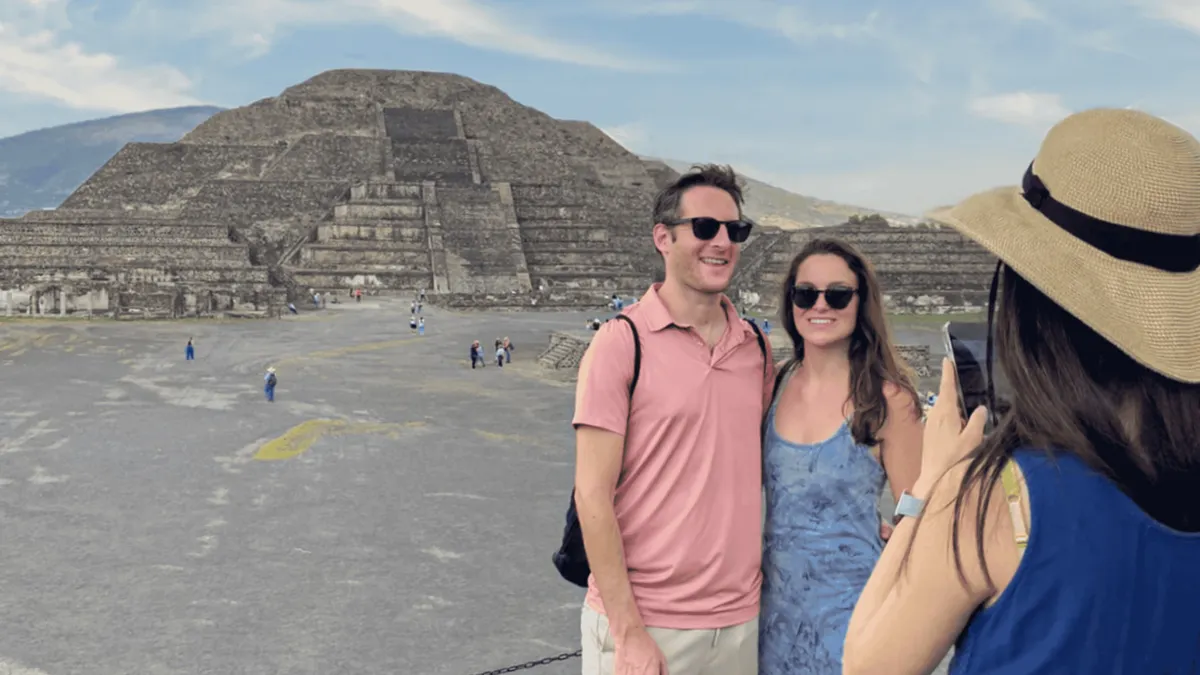 from $68
Mexico City: Teotihuacan Early Access Tour & Optional Lunch
Listing details checked 2026-08-30
Early access at the gate before the coaches arrive, with transport from the centre and a licensed guide.
Check Availability from $162
CDMX: Teotihuacan Balloon Flight with Optional Pyramids Tour
Listing details checked 2026-08-30
Balloon flight over the pyramids at sunrise, with the option to add the guided site visit afterwards.
Check AvailabilityWhat Happened Here, According To The Account
The story the shrine rests on, told as the story it is.
The account, written down in Nahuatl in the seventeenth century as the Nican mopohua, has Juan Diego crossing Tepeyac hill in December 1531, ten years after the fall of Tenochtitlan, and meeting a young woman who speaks to him in Nahuatl and asks for a church on that spot. The bishop wants proof. She tells Juan Diego to gather roses — flowering out of season — in his cloak, and when he opens it before the bishop the roses fall out and the image is on the cloth.
Historians argue about almost every part of this: the dating of the documents, whether Juan Diego was a single person, and what the shrine's placement on a hill associated with an earlier goddess meant to the people who came to it. The Church's own position is settled — Juan Diego was canonised in 2002 and the Virgin of Guadalupe is patroness of the Americas — and 20 million or so visits a year make the theological argument beside the point for a visitor.
What is not in dispute is the image's role afterwards. The banner of Guadalupe was carried in the independence war in 1810 and in the Revolution a century later, and the figure is on car windscreens, market stalls and tattoos across the country. Coming here is the shortest route to understanding how thoroughly Mexican identity and this image are braided together.
What Is On The Site
Six churches on one plaza, and they are not equally interesting.
The new basilica (1976). A circular concrete tent by Pedro Ramírez Vázquez — the architect of the Anthropology Museum — seating about 10,000 with no internal columns, so that everyone can see the altar. The tilma hangs above and behind it, and four moving walkways run beneath, carrying visitors past at a fixed pace. Ride them twice if you want a second look; nobody minds.
The old basilica (1709). Beside it, and tilting: like everything in this valley it has been sinking, and the list is obvious from the plaza. It was the shrine until the new building took over and it is now open again after decades of stabilisation.
Tepeyac hill. Stairs and a ramp climb behind the basilicas past the Capilla del Cerrito, built where the apparition is placed, and the Panteón del Tepeyac. Ten minutes up, and the view back over the plaza and the north of the city is the best reason to make the climb. The gardens on the way hold the sculpted scene of Juan Diego before the bishop.
The rest: the Capilla del Pocito, a small eighteenth-century domed chapel that is the prettiest building on the site; the parish church; and the Museo de la Basílica, which holds colonial painting and votive offerings. The plaza itself, the Plaza de las Américas, is enormous and on ordinary days mostly empty.
When To Come, And The Date To Avoid
One date dominates the calendar here more than any other in this guide.
12 December, the feast of the Virgin of Guadalupe, brings pilgrimages that are counted in millions, many of them walking or cycling for days and arriving overnight on the 11th. Roads north of the centre close, the metro is packed and the plaza is a sea of people. If you want to see it, come knowing that it is a pilgrimage and not a sight; if you do not, keep the whole of 11 and 12 December clear.
Otherwise: early morning is calm and the light on the plaza is good; Sunday is the busiest ordinary day, with masses through the morning; weekday afternoons are quiet. Services take priority over sightseeing everywhere on the site, and the walkways under the tilma run regardless.
One practical pairing: the shrine sits on the road north towards Teotihuacán, which is why nearly every pyramid tour stops here. Doing both in a day on your own is possible by metro and coach, but tight — the tour that combines them exists precisely because the geography invites it.
Practical Notes
Five things worth knowing before you go north.
Getting there. Metro La Villa-Basílica on Line 6, three minutes on foot from the gate; about 35 minutes from the Zócalo with one change. An app car takes 25 to 45 minutes depending on traffic. Getting around has the fares.
Dress and behaviour. It is a working shrine: shoulders covered, hats off inside, quiet during mass, and no flash. Photography is otherwise normal.
Bags and security. Bag checks at the gates on busy days.
The neighbourhood. La Villa is an ordinary working district and the streets immediately outside the gates are full of stalls selling religious goods; it is busy and safe by day, and there is no reason to linger after dark.
Eating. Food stalls line the approach; the sit-down options are basic. Plan lunch elsewhere.
Basílica de Guadalupe Map
The two basilicas, the chapel on the hill and the metro station that serves them.
Next Stop From The Basílica
Driving times on a weekday; the shrine is well north of the centre.
Teotihuacán
The pyramids are on the same road out of the city, which is why the combined tour is the standard product.
40 min by road northBasílica de Guadalupe Questions
Is the Basílica de Guadalupe free?
Yes. There is no admission charge anywhere on the site — the new basilica, the old one, the chapels on Tepeyac hill and the museum are all free, every day from 06:00 to 21:00, per the shrine's own schedule. The only cost of a visit is getting there: MX$5 on the Metro to La Villa-Basílica on Line 6.
Why is the Basilica of Guadalupe so famous?
It is the most visited Catholic shrine outside Rome, drawing something like 20 million visits a year, and it holds the tilma — the cloak on which the image of the Virgin is said to have appeared in December 1531. Beyond the religion, the image is a national symbol carried in the independence war and the Revolution. The account is above.
What is the tilma and can you see it?
The cloak of Juan Diego, bearing the image, displayed above and behind the altar of the modern basilica. You see it from one of four moving walkways that run beneath it — you cannot stand still in front of it, and each pass takes seconds. Riding twice is normal and nobody objects.
Does the Catholic Church recognize the Virgen de Guadalupe?
Yes. The Catholic Church recognises the Virgen de Guadalupe and has done formally for centuries: the shrine was granted papal recognition in the eighteenth century, the Virgin was declared patroness of Mexico and later of the Americas, and Juan Diego was canonised by John Paul II in 2002, in this basilica. The historical questions scholars raise about the documents are separate from the Church's position, which is settled — the account and the arguments are above.
When should I avoid the Basílica de Guadalupe?
11 and 12 December, when the feast brings pilgrimages counted in millions, closes roads and turns ordinary visiting into crowd management. Sundays are the busiest ordinary day. Early mornings and weekday afternoons are calm — the calendar is above.
How long do you need at the Basílica de Guadalupe?
The shrine publishes no figure; our routing is about 90 minutes for the plaza, both basilicas, the walkway under the tilma and the ten-minute climb up Tepeyac hill. Adding it to a Teotihuacán day is the standard way to fit it in.
Is the Basílica open on Mondays?
Yes — every day, 06:00 to 21:00. That makes it one of the few major sights available on the Monday when the city's museums close, alongside Teotihuacán and the Museo Soumaya.
Where This Fits In A Day
North of everything, and best combined rather than visited alone.
The efficient version is the Monday: Teotihuacán in the morning and the basilica on the way back, which is exactly what the combined tour does at $68 with lunch. Doing it independently means the coach from Terminal Norte out and the Metro Line 6 back, which works but leaves little slack.
If you are coming on its own, take a morning: 90 minutes on the site and back in the centre for lunch. Where the whole trip goes is on the Mexico City city guide.
The Shrine On Film
Three visitor walk-throughs, useful for the scale of the plaza and how the walkway under the tilma works.
The incredible Basilica of Our Lady of Guadalupe
A full walk of the site, both basilicas and the hill.
Video: True MexicoBasílica de Guadalupe, Mexico City
The plaza and the crowds on an ordinary day.
Video: Gringo, InterruptedOur Lady of Guadalupe in Mexico City
The tilma, the walkways and the chapels behind.
Video: Matthew AndrewVideos load from YouTube only when you press play.
Page last reviewed 2026-08-30. Prices, hours and terms are set by the venue or operator and confirmed at checkout.
We may earn a commission if you book through one of our links, at no extra cost to you. Full affiliate disclosure