 Visit Mexico City Guide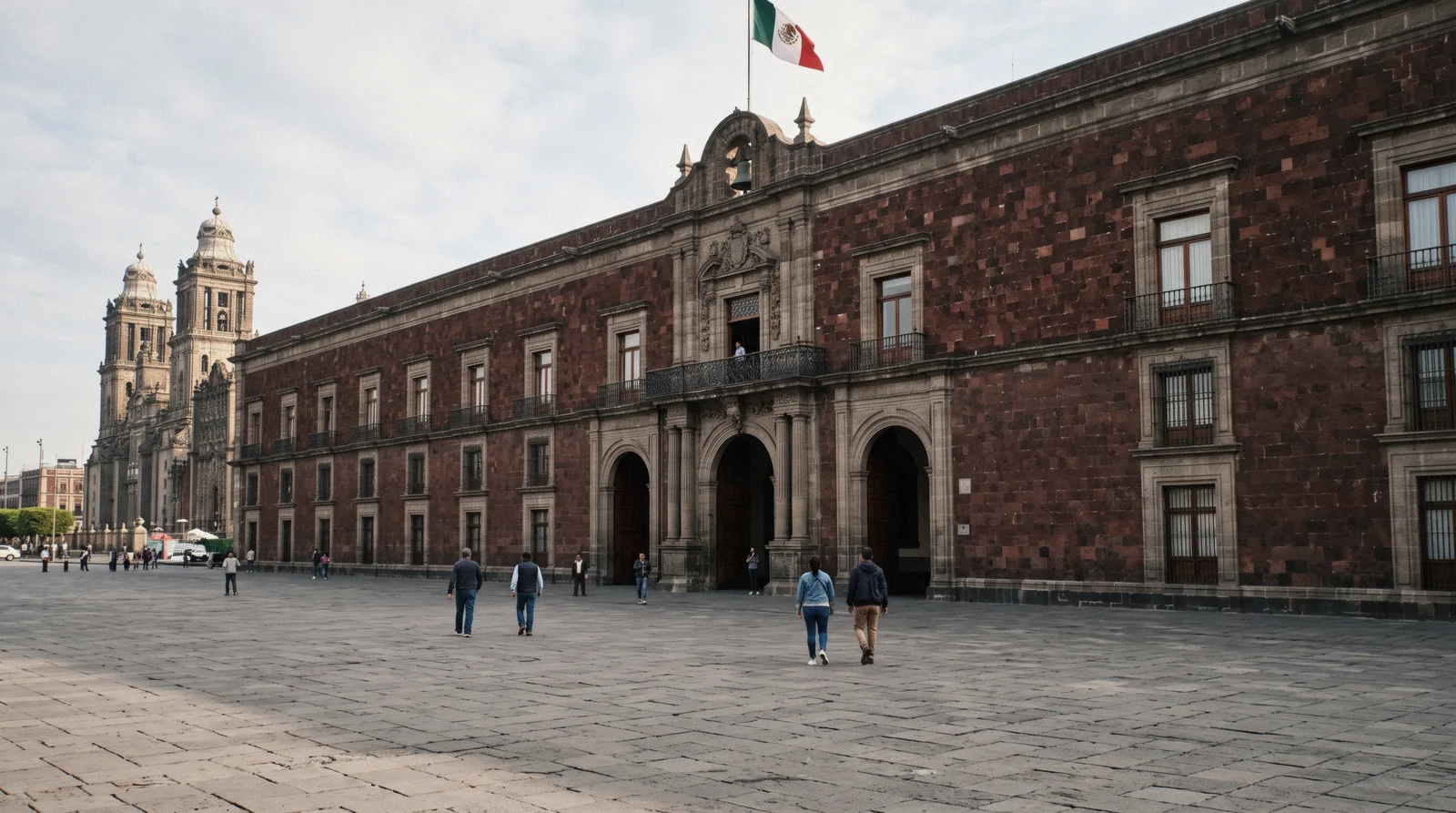
Palacio Nacional
The Palacio Nacional, Mexico City's seat of government, fills the east side of the Zócalo: a 200-metre facade of red volcanic tezontle standing where Moctezuma's palace stood and where the viceroys ruled after him. Inside, on the main staircase, is Diego Rivera's The History of Mexico — the mural cycle he painted between 1929 and 1951, from Tenochtitlan to the class war he expected next. Entry is free with photo identification. It is also the president's working palace and residence, which is why access here changes without notice and why this page is more careful than most.
Quick answer Can you get in, what it costs, and what to bring
Yes, you can visit the Palacio Nacional, and it is free: the draw is Diego Rivera's mural cycle on the main staircase and the first-floor corridor. You need a passport or official photo ID at the security post, and access is not guaranteed on any particular day, because the building is the president's workplace and home.
Key takeaways
- There is no ticket and nothing to book — what to bring and where to queue is the whole procedure
- The murals are the reason to come: Rivera painted them between 1929 and 1951, and the staircase is one of the great works of the twentieth century
- It stands on the Zócalo next to the cathedral and two minutes from the Templo Mayor — the three are one morning
- Everything on this page about hours is reported rather than read: the palace publishes no visitor schedule we could verify on 30 August 2026
- Where the palace sits in a Centro morning is set out on the Mexico City travel guide
Key facts
Opening hours
| Reported, Tuesday to Sunday | 09:00–17:00 |
|---|
Closed Mondays, and whenever state business requires it
Planning it
- Time needed
- Not stated; our routing: 1 hour for the murals, 90 minutes with the courtyards
- Book ahead
- Recommended — a few days
- Address
- Plaza de la Constitución s/n, Centro Histórico, 06066 Ciudad de México
Getting In: What Is Verified And What Is Not
This guide prints its sources, and here the honest answer is that the official ones are thin.
What is certain. Entry is free, no ticket is sold, and photo identification — a passport for foreign visitors — is required at the security post on the Zócalo side. The murals are on the main staircase and the first-floor corridor around the central courtyard.
What is reported but not verified. Mexican press and visitor accounts consistently describe opening Tuesday to Sunday, roughly 09:00 to 17:00, with registration from about 10:00 and timed entries every half hour until the late afternoon. We could not confirm any of that on an official page on 30 August 2026: the government's own visitor information for the palace is not published in a form we could read, and INAH's archaeological-windows page covers only part of the building.
What changes without notice. The Palacio Nacional became the president's residence and workplace again in 2018, and since then large parts of it — including spaces that were previously shown — have been closed to visitors. State ceremonies, security operations and the 15 September Grito close it outright. So: bring the ID, arrive in the morning, ask the guards before you join a queue, and treat the visit as a bonus rather than a fixture in the plan.
If it is shut, the Templo Mayor and the cathedral are two minutes away.
What It Costs
There is nothing to buy here, which makes this the shortest table on the site. The guided walks below are the paid alternative, and what they buy is the reading of the murals rather than the entry.
| Option | Price | Includes | Cancel | Book |
|---|---|---|---|---|
| Walk-up entry with photo ID | Free | The staircase murals, the corridor, the courtyards | No ticket exists | Official site |
| Historic-centre walking tour | Listed at $27.01 | Three hours around the Zócalo; palace entry not guaranteed | Free up to 24 hours before | Check Availability |
| Centro food tour | Listed at $88.10 | The streets around the palace, with seven tastings | Free up to 24 hours before | Check Availability |
No operator can guarantee entry to a working seat of government, and any tour that promises it is promising something it does not control.
Guided Walks Around The Palace
Each card links to the operator's own page. Prices as listed on 30 August 2026.
 from $27.01
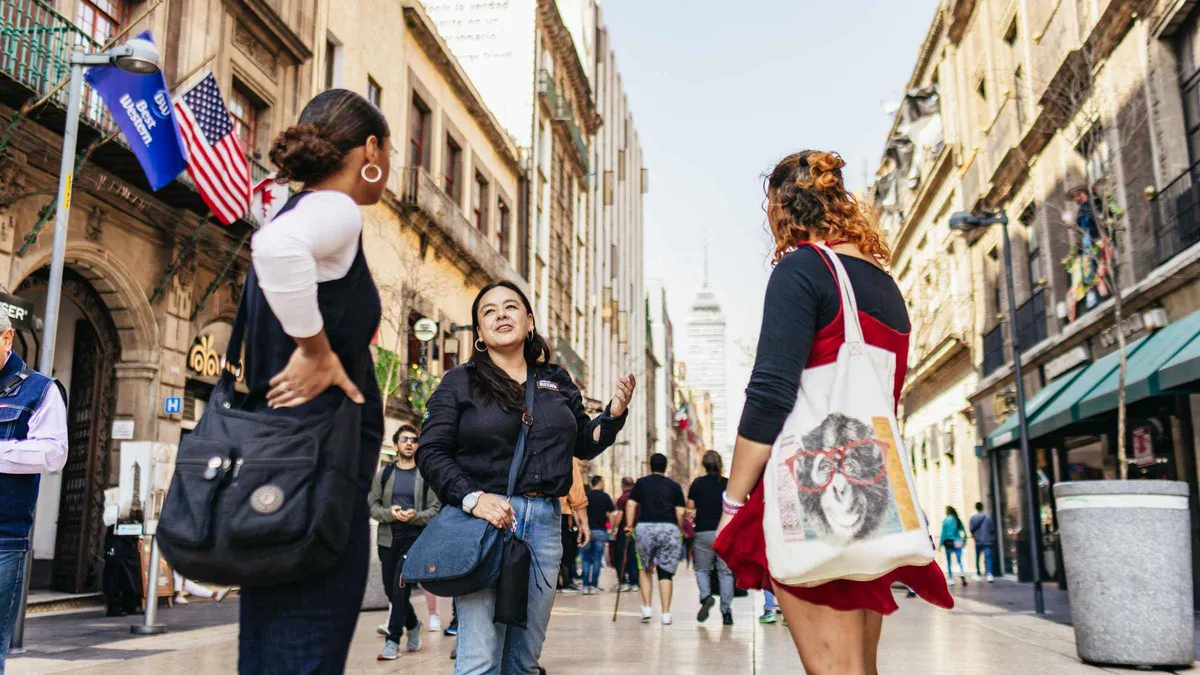
Mexico City: Historic Downtown Walking Tour
Listing details checked 2026-08-30
Three hours on foot through the Zócalo, Bellas Artes and the streets between them, with the history attached.
Check Availability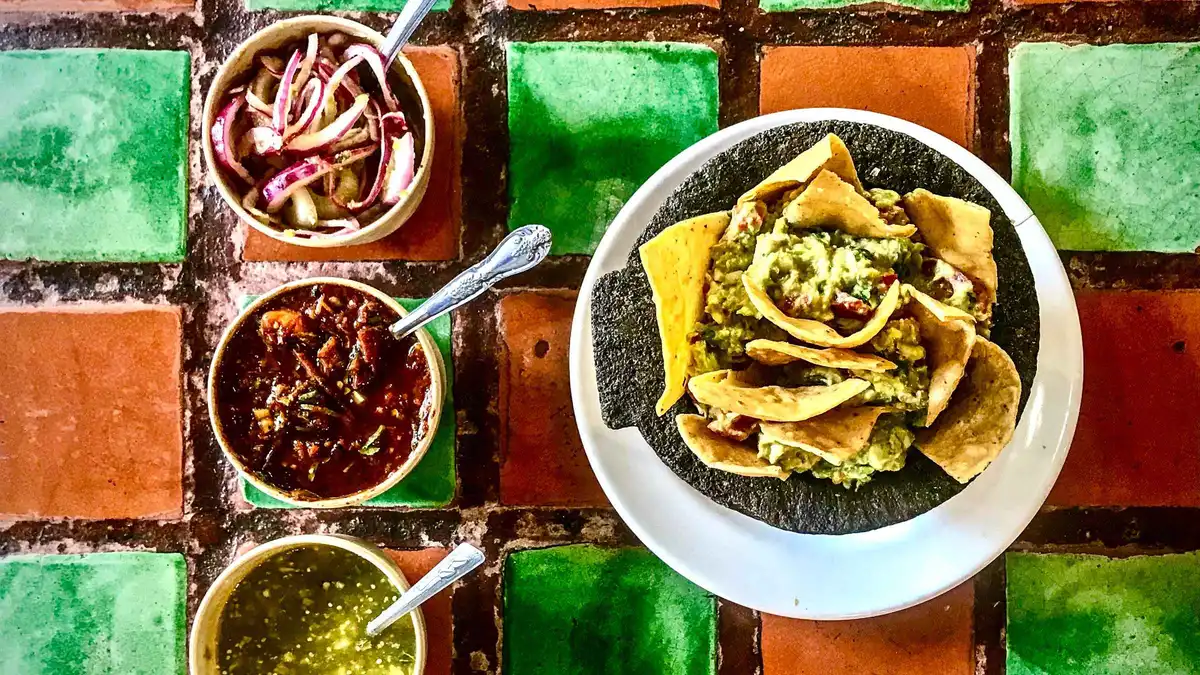 from $88.10
Mexico City: Old Town Food Tour of 7 Tastings & Secret Dish
Listing details checked 2026-08-30
Seven tastings through the Centro Histórico, ending with you able to order for yourself.
Check Availability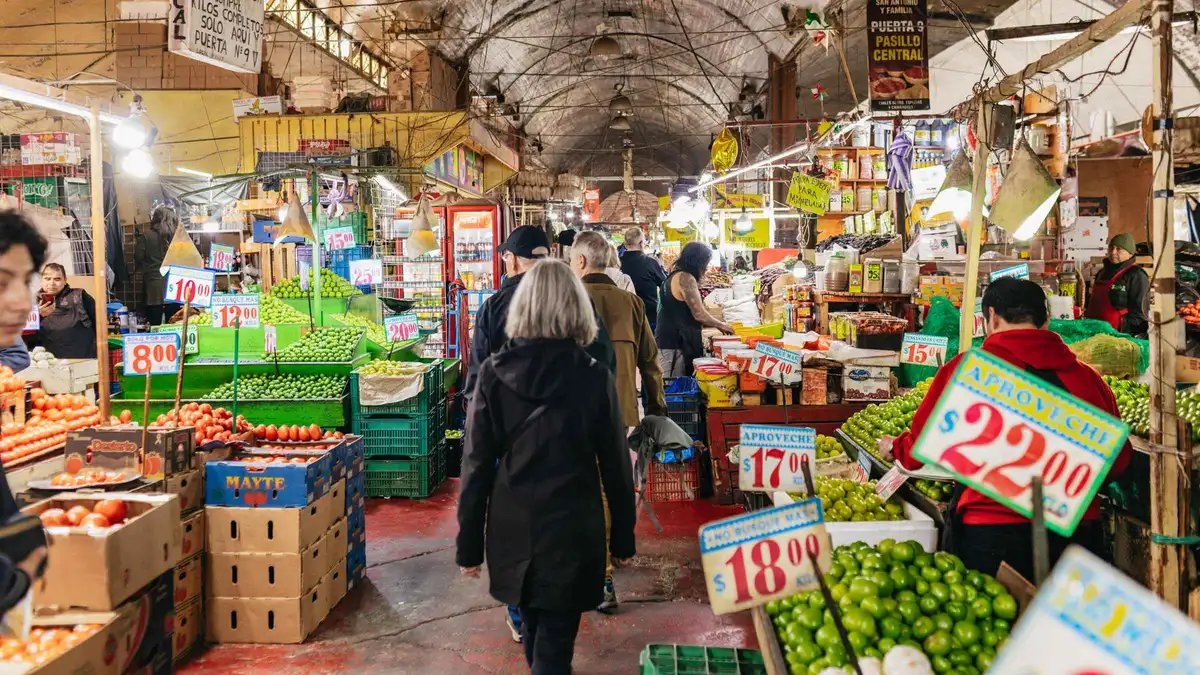 from $88.05
Mexico City: Local Food Tour at Mexico’s 2nd Largest Market
Listing details checked 2026-08-30
A market morning through La Merced and Sonora, the city's second-largest market complex.
Check AvailabilityRivera's History Of Mexico, Panel By Panel
One staircase, three walls, twenty-two years of painting, and an argument about what the country is.
Rivera began the staircase in 1929 and worked on the palace until 1951. The composition reads as one continuous surface, but it is three walls with three jobs. The north wall is the pre-Hispanic world: Tenochtitlan on its lake, the markets, the codices, Quetzalcóatl above it.
The west wall, the one you face as you climb, is the Conquest and everything after — Cortés, the friars, the Inquisition, independence, the American invasion, the French, Juárez, Díaz, the Revolution, all stacked in a single crowded arch. The south wall is Rivera's own future: Marx pointing towards a socialist Mexico, painted in the palace of a government that was neither.
The corridor upstairs
Along the first-floor corridor Rivera painted the panels he finished last: the great Tlatelolco market scene, the Totonac and Zapotec panels, the maize and cacao harvests, the dyeing of cloth. They are calmer than the staircase and often emptier, and they are where the detail is — faces, tools, goods laid out for sale, a whole economy inventoried at close range.
What to look for if you have twenty minutes
The eagle-and-cactus founding scene on the north wall; Cortés depicted syphilitic and mean on the west; La Malinche with a blue-eyed child; the burning of the codices; and, high on the south wall, Marx with a scroll. Rivera's politics are not subtext here, they are the subject, and the building's current occupants work below them every day.
The Building: Moctezuma's Palace, Then Cortés's, Then Everyone's
Five hundred years on one plot, and the stone tells most of it.
Moctezuma II's palace stood on this ground. Cortés built his own residence over it after 1521, and the Spanish crown bought the property in 1562 to house the viceroys — it was the seat of colonial government for two and a half centuries. The facade you see is red tezontle, the porous volcanic stone the Mexica had used before the Spanish adopted it, which is what gives the whole Centro its dark red-brown colour.
Independence made it the National Palace; the third floor was added in the 1920s. The bell above the central balcony is the one Miguel Hidalgo rang in Dolores in 1810 to begin the war of independence, brought here in 1896 — and it is rung by the president on the night of 15 September, before the Grito, to a Zócalo packed to its edges.
Beneath and behind, INAH maintains ventanas arqueológicas, archaeological windows into the layers below, which are part of the visit when they are open. That is the palace in one sentence: an Aztec platform under a viceregal courtyard under a working presidency, with a mural of the whole story painted up the stairs.
What Else Is Inside, When It Is Open
The murals are the reason to come; four other things are worth the walk if the day is generous.
The central courtyard. Two storeys of arcades around a fountain, the calmest square metres on the Zócalo, and the place from which the staircase opens. On a busy morning it is also where the queue forms.
The archaeological windows. INAH maintains ventanas arqueológicas cut into the floors and walls, showing the Mexica and colonial layers the palace stands on — the same stratigraphy the Templo Mayor exposes three minutes away, seen from inside a working building.
The Recinto Homenaje a Benito Juárez. The rooms where Juárez lived and died in 1872, kept as they were, on the upper floor. Opening is subject to the same day-by-day rules as the rest.
The gardens and the botanical courtyard, restored in the last decade with plants from the pre-Hispanic pharmacopoeia. Whether any of these are open on the day you come is genuinely unknowable in advance, which is the theme of this whole page.
Who Lives Here Now
A question the search results ask, and it explains the access rules better than anything else on this page.
Since 2018 the Palacio Nacional has been the residence as well as the office of the president of Mexico — a deliberate break with Los Pinos, the presidential compound used from 1934, which was opened to the public as a cultural centre. President Claudia Sheinbaum, in office since October 2024, works from the palace and holds the daily morning press conference in it.
For a visitor that has one consequence and it is the whole reason for the caution on this page: the parts of the building open to the public are the parts not in use that day. Nothing about it behaves like a museum, because it is not one.
Palacio Nacional Map
The entrance on the Zócalo side, and the three things within three minutes of it.
Next Stop From The Palace
Walk minutes are our estimates from the GPS distances.
Templo Mayor
The Mexica temple whose precinct this palace was built over — the two together are the clearest hour in the city.
3 min walkPalacio de Bellas Artes
More murals, by Rivera and three others, on a paid floor — MX$95, and free on Sundays to everyone.
14 min walk westPalacio Nacional Questions
Can you visit the Palacio Nacional in Mexico City?
Yes, free of charge and without a ticket, on the days it is open to the public: you present a passport or official photo ID at the security post on the Zócalo side and walk to the staircase where Rivera's murals are. Because the building is the president's workplace and residence, access is not guaranteed on any given day — the full picture is above.
Where is the Palacio Nacional located in Mexico City?
On the east side of the Zócalo, Plaza de la Constitución, in the Centro Histórico — a 200-metre red tezontle facade facing the square, with the cathedral to its left and the Templo Mayor three minutes away. Metro Zócalo on Line 2 comes out on the paving in front of it.
How much does the Palacio Nacional cost?
Nothing. There is no ticket and no online booking, and any site selling entry to it is selling something it does not control. The paid alternatives are guided walks of the Centro that pass it, which buy you the reading of the murals rather than the entry.
What are the Diego Rivera murals in the Palacio Nacional?
The History of Mexico, painted between 1929 and 1951: the pre-Hispanic world on the north wall, the Conquest and everything after it on the west wall you face as you climb, and Rivera's own socialist future on the south. The first-floor corridor holds the later panels, including the Tlatelolco market scene. The panel-by-panel guide is above.
Who lives in the Palacio Nacional?
The president of Mexico. The palace became the presidential residence as well as the seat of government again in 2018, replacing Los Pinos, and the president holds the daily morning press conference inside it. That is why parts of the building are closed on any given day — the detail is above.
Is the Palacio Nacional open on Mondays?
Reported as closed on Mondays, in line with the city's museums, but the palace publishes no schedule we could verify. Monday is in any case the day to give to Teotihuacán, which opens every day of the year — the Monday page has the alternatives.
Where This Fits In A Day
An hour, in the middle of a Centro morning, with a plan B in your pocket.
The order that works: Zócalo at eight for the flag, Templo Mayor when it opens at nine, then the palace late morning when the queue has thinned and the guards can tell you what is open. If it is closed, walk twelve minutes west to Bellas Artes, where the mural floor is never a matter of state business.
That is the first morning of the one-day itinerary, and how it fits the rest of a first visit is on the independent Mexico City guide.
The Murals On Film
Three walk-throughs of the staircase and the corridor, useful because photographs never show the scale.
Diego Rivera's murals at the Palacio Nacional
A close pass along the staircase and the corridor panels.
Video: Rob LowrieDiego Rivera murals, National Palace
The whole cycle filmed wall by wall.
Video: WolfPalacio Nacional de México con murales de Diego Rivera
The courtyards and the building around the murals.
Video: VideomanjohnVideos load from YouTube only when you press play.
Page last reviewed 2026-08-30. Prices, hours and terms are set by the venue or operator and confirmed at checkout.
We may earn a commission if you book through one of our links, at no extra cost to you. Full affiliate disclosure