 Visit Mexico City Guide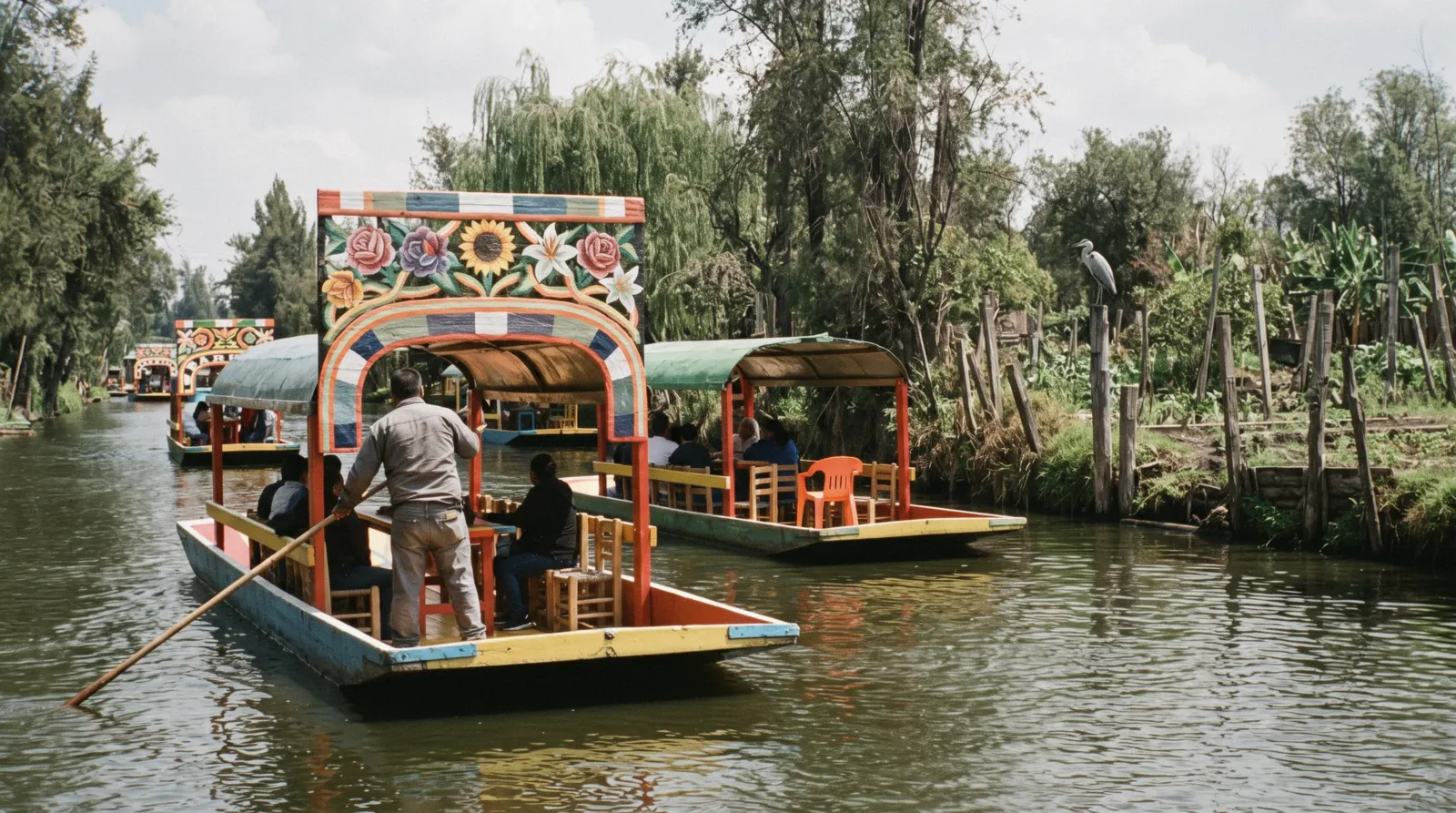
Xochimilco
Xochimilco is what is left of the lake Mexico City was built in: some 180 kilometres of canals in the far south of the city, worked as floating gardens — chinampas — since before the Spanish arrived, and listed by UNESCO with the historic centre in 1987. You see it from a trajinera, a flat painted boat poled by one person, hired by the hour and by the boat rather than by the seat. The borough sets the rate at MX$750 an hour for up to eighteen people, the same at every authorised pier, and knowing that one number is the difference between a good afternoon and being overcharged.
Quick answer What it costs, which pier, and what it is actually like
A trajinera at Xochimilco costs MX$750 an hour — about US$44 — and that is the price of the whole boat, which takes up to eighteen people. Two hours is the usual ride. There is no ticket and no booking: you walk to a pier, agree the number of hours, and pay the boat.
Key takeaways
- The rate is set by the borough and is the same at every authorised pier; anyone quoting per person is quoting wrongly
- Eleven piers are authorised — Nativitas and Las Flores are the busy traditional ones, Cuemanco and Fernando Celada run into the protected wetland
- Food, drink, mariachi and marimba are sold from boats that pull alongside, priced separately — a song is negotiated per song
- Going with a guided boat from about US$41.51 a head makes sense for two people; for six or more, hire your own and split the MX$750
- How the southern day fits a first visit is on the guide to visiting Mexico City
Key facts
Opening hours
| Embarcadero Nativitas | 08:00–21:00 |
|---|---|
| Embarcadero Cuemanco | 08:00–20:00 |
Closed None
Admission
- Adult
- MX$750 per boat per hour (about US$44), whatever the number of passengers
- Free
- Walking the piers and the market costs nothing
Planning it
- Time needed
- Not stated by the borough; our routing: 2 hours on the water, half a day with the trip out
- Book ahead
- Optional — walk-up usually fine
- Address
- Embarcaderos of Xochimilco, 16070 Ciudad de México
What A Boat Costs, And What A Tour Costs
The borough's own rate beside the platform options, read on 30 August 2026 at US$1 = MX$17.0. The first row is the official price and carries no tracking of ours — it is what you pay at any authorised pier.
| Option | Price | Includes | Cancel | Book |
|---|---|---|---|---|
| Hire a trajinera yourself | MX$750 per hour, per boat | The boat, the poler, up to 18 people | No booking exists | Official site |
| Shared boat with a guide | Listed at $41.51 a person | A place on a boat, guide, no negotiating | Free up to 24 hours before | Check Availability |
| Mezcal tasting on the canals | Listed at $36.39 | Boat, tasting, music | Free up to 24 hours before | Check Availability |
| Xochimilco with Coyoacán and the Casa Azul | Listed at $68 | Transport, the boat and the southern day | Free up to 24 hours before | Check Availability |
The arithmetic that decides it: two people on a shared boat pay about US$83; two people hiring a whole boat for two hours pay MX$1,500, about US$88, and have it to themselves. Six people hiring their own pay MX$250 each for two hours.
Boats And Southern Day Trips
Each card links to the operator's own page. Prices as listed on 30 August 2026.
 from $41.51
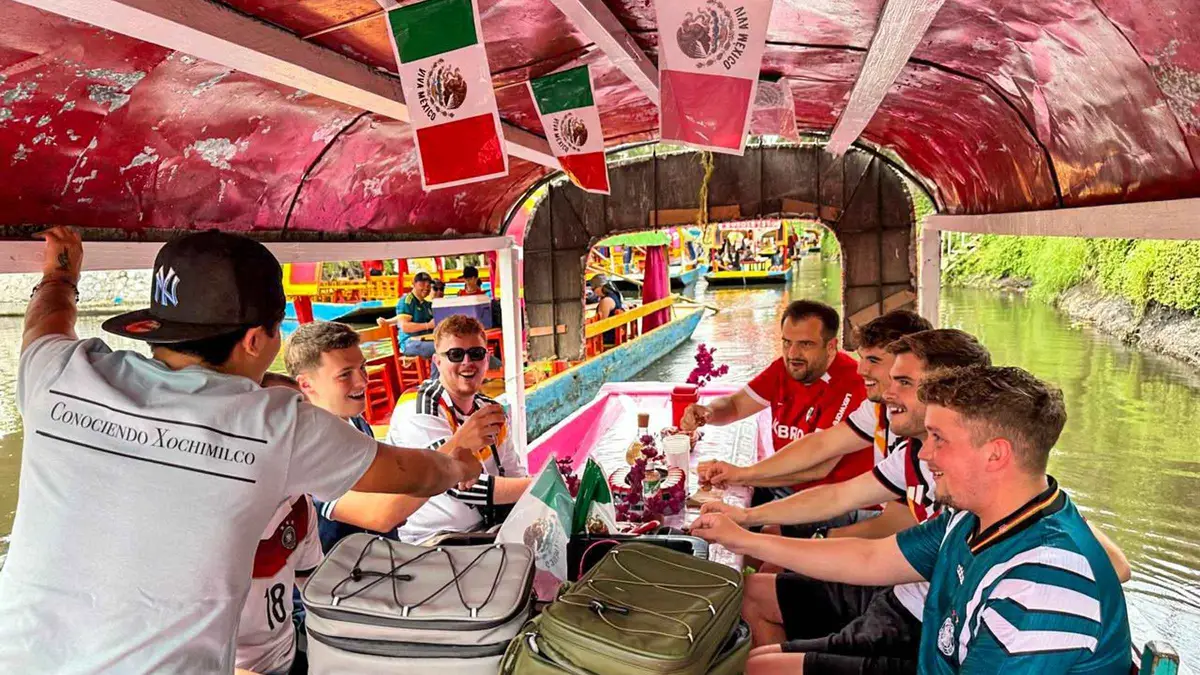
Xochimilco: Traditional Boat Sightseeing Tour, Culture and Fun.
Listing details checked 2026-08-30
A place on a shared trajinera with a guide, instead of negotiating a MX$750 boat at the embarcadero.
Check Availability from $36.39
Xochimilco Mezcal Party: Culture, Flavor and Fun
Listing details checked 2026-08-30
Mezcal tasting on the canals, an afternoon boat with drinks and music rather than a sightseeing run.
Check Availability from $68
Mexico City: Teotihuacan & Guadalupe Shrine Tour with Lunch
Listing details checked 2026-08-30
Full day to the pyramids with the Basílica de Guadalupe and lunch — the version most first visits take.
Check AvailabilityThe Official Rate, And How Overcharging Happens
One number, published by the borough, and the three ways people end up paying more than it.
The Alcaldía de Xochimilco sets and publishes the rate: MX$750 per hour, per trajinera, at every authorised embarcadero, for anything from one passenger to eighteen. It is not a per-person price, it does not change with the day of the week, and it does not change because your group is small. The borough repeats this in its own public notices precisely because visitors are quoted otherwise.
How it goes wrong. First, per-person quoting — someone offers 'MX$200 each' for a group of six, which is MX$1,200 for a boat that costs MX$750. Second, the hours: agree the number of hours before you step on, because a two-hour ride quietly becoming three is the commonest complaint. Third, the touts on the approach roads who intercept cars and walk-ups before the pier — they are selling access to something that has a fixed price fifty metres further on.
What is legitimately extra: food and drink bought from the boats that pull alongside; a mariachi or marimba group, which is negotiated per song and typically costs more than most people expect; and parking at the pier if you drive. Agree those prices before the service starts, in pesos, out loud. Cash is what everything here runs on.
Which Pier To Use
Eleven are authorised — eight in the tourist zone and three in the ecological zone — and the choice decides what kind of afternoon you get.
The borough's own listing splits them: the historic tourist embarcaderos, which are busy, loud and full of food boats, and the ecological ones, which run into the protected wetland where the chinampas are still farmed.
| Pier | Hours | What it is like | Best for |
|---|---|---|---|
| Nativitas | Daily 08:00–21:00 | The biggest and most traditional: parking, market, restaurants | First visits, groups, evenings |
| Las Flores | Daylight hours | Traditional, slightly smaller, off Calle del Mercado | A shorter walk from the market |
| Cuemanco | Daily 08:00–20:00 | Beside the Olympic rowing course, at the edge of the protected zone | Birds, chinampas, quiet |
| Fernando Celada | Mon–Fri 08:00–18:00; Sat–Sun 08:00–22:00 | Ecological routes into the wetland | Nature over party |
| Zacapa and the rest | Varies | Smaller traditional piers | Locals, weekends |
If you want the postcard — painted boats three abreast, marimba, beer, families — go to Nativitas on a Sunday. If you want the reason UNESCO listed the place, go to Cuemanco or Fernando Celada on a weekday morning and ask the poler for the chinampa route rather than the party circuit. Both cost MX$750 an hour.
What You Actually See From The Boat
Farmland, not scenery — which is the point, and the thing most descriptions get wrong.
The chinampas are artificial islands built up from lake mud and staked with willows, farmed continuously since before the conquest and still producing flowers and vegetables for the city. From the water you pass greenhouses, small landings, dogs, plant nurseries selling cempasúchil marigolds by the hundred before Day of the Dead, and long straight channels that look like canals because that is exactly what they are.
The Island of the Dolls
The Isla de las Muñecas, hung with weathered dolls by a caretaker who died in 2001, is deep in the ecological zone — a genuine two to four hours each way from the main piers, not a stop on an ordinary two-hour ride. Boats advertising it from the tourist piers usually go to a nearer imitation. If it is the reason you are coming, budget the whole day, leave early from Cuemanco, and agree the hours and the price before you set off.
The axolotl
Xochimilco is the only place on earth where the axolotl lives wild, and it is critically endangered — you will not see one from a boat. What you can do is visit one of the chinampa research stations that keep them, which some ecological routes include; ask when you agree the route rather than expecting it.
When To Go, And What It Is Like Then
The same canals are two entirely different places on a Sunday and a Tuesday.
Sunday afternoon is the full experience: hundreds of boats, families, floating kitchens, marimba and mariachi boats working the traffic, and a crush at the pier. Saturday is nearly the same. Weekday mornings are the opposite — half a dozen boats on the water, herons, the sound of the pole in the mud, and the farmers actually working. Both are worth doing; they are not interchangeable.
Seasonally: the rains from June to September arrive in the afternoon, and a covered trajinera in a downpour is atmospheric for ten minutes and cold after twenty — go in the morning in those months. Late October and the days around 1 and 2 November bring Day of the Dead night rides and the marigold harvest, which is the most beautiful time to be here and the busiest. Bring a layer whatever the month: the water is cool and the wind picks up at dusk.
Getting To The Piers
It is the far south of the city, and this is the longest journey in this guide that is still inside it.
From the Centro Histórico allow an hour to ninety minutes. The public route is Metro Line 2 to Tasqueña and then the Tren Ligero to Xochimilco, which puts you a fifteen-minute walk or a short taxi from Nativitas; Metro is MX$5 a trip and the Tren Ligero MX$3 on the operators' published tariffs. An app car from Coyoacán takes about 30 minutes, from the Centro about an hour in traffic, and is the sensible way back if you finish after dark.
Driving is fine on a weekday and unpleasant on a Sunday; the piers have paid parking. Whichever way you come, the classic pairing is Coyoacán in the morning — the Casa Azul if you hold a slot — and the canals after lunch, which is how the three-day itinerary builds the southern day.
Xochimilco Map: The Piers And The Zones
The four piers worth knowing, the tourist canals and the protected wetland behind them.
Next Stop From Xochimilco
Driving times on a weekday; the canals are the far end of the city.
Coyoacán
The natural first half of this day: the plaza, the market and the Casa Azul if you hold a slot.
30 min by carMuseo Frida Kahlo
Book the morning slot, eat in Coyoacán, and be at a pier by two — the boats run later than the museums.
35 min by carMexico City
Back to the city guide: where this afternoon sits in a three- or four-day trip.
1 h by metro and light railXochimilco Questions
How much does it cost to go to Xochimilco?
MX$750 an hour for the whole trajinera — about US$44 — at any authorised pier, for one to eighteen passengers. Two hours is the usual ride, so a boat of six pays about MX$250 each. Food, drink and music from the boats that come alongside are extra and negotiated separately. The rate section explains how overcharging happens.
Is it worth visiting Xochimilco?
Yes, if you understand what it is: farmland on water, not a scenic lake. A weekday morning at Cuemanco is quiet, green and genuinely old; a Sunday afternoon at Nativitas is a floating party. Both are worth doing and they are not the same outing — when to go sets out the difference.
Why is Xochimilco famous?
It is the surviving fragment of the lake system Tenochtitlan was built in, farmed on chinampas — artificial islands of lake mud — since before the Spanish arrived, and UNESCO listed it with the historic centre in 1987. It is also the only place in the world where the axolotl still lives wild, though you will not see one from a boat.
Can you see the Island of the Dolls?
Only with a whole day. The real Isla de las Muñecas is deep in the ecological zone, two to four hours each way from the main piers; boats offering it on a short ride from the tourist piers generally go to a nearer imitation. Leave early from Cuemanco and agree the hours and price before you set off — the detail is above.
Did Lady Gaga go to Xochimilco?
She filmed here. Lady Gaga shot the video for The Dead Dance, directed by Tim Burton, on the Isla de las Muñecas in Xochimilco, and it was released on 3 September 2025 — which is why searches for the Island of the Dolls jumped that autumn. The practical footnote for anyone planning a visit off the back of it: the real island is two to four hours by boat each way from the main piers, so it is a full day, not a stop on a two-hour ride. What that involves is above.
Do you need to book Xochimilco in advance?
No. There is no ticket and no reservation: you walk to an authorised pier and hire a boat at the posted rate. Booking a guided boat makes sense for one or two people who would rather not negotiate, or for a themed ride like the mezcal tasting — for a group of six or more, hiring your own is cheaper.
What should I bring?
Cash in small notes — everything here runs on it, and the boats that sell food do not take cards. A layer for the wind, sunscreen for the open water, and in the rainy season a morning slot rather than an afternoon one. Bathrooms are at the piers, not on the boats.
Where This Fits In A Day
It is an afternoon, and it belongs at the end of a southern day.
Morning in Coyoacán — the Casa Azul if you hold a slot, the market for lunch — then the canals from about two. Two hours on the water puts you back on dry land by five, before the rain in season and before the traffic north hardens. That is day three of the three-day itinerary.
If you are only here for a weekend, this is the one thing on the list that is not a museum, and that is an argument for keeping it. The rest of the trip is on the independent Mexico City guide.
The Canals On Film
Three rides recorded by visitors, which show the difference between a Sunday and a weekday better than any description.
Mexico City travel guide 2026
Includes the canals and the southern boroughs.
Video: Martijn Around The WorldMexico City tips for first timers
Practical points, including what to carry in cash.
Video: Happy to WanderHow to travel CDMX
The Tren Ligero and the route south.
Video: Wanderlust WellmanVideos load from YouTube only when you press play.
Page last reviewed 2026-08-30. Prices, hours and terms are set by the venue or operator and confirmed at checkout.
We may earn a commission if you book through one of our links, at no extra cost to you. Full affiliate disclosure