 Visit Mexico City Guide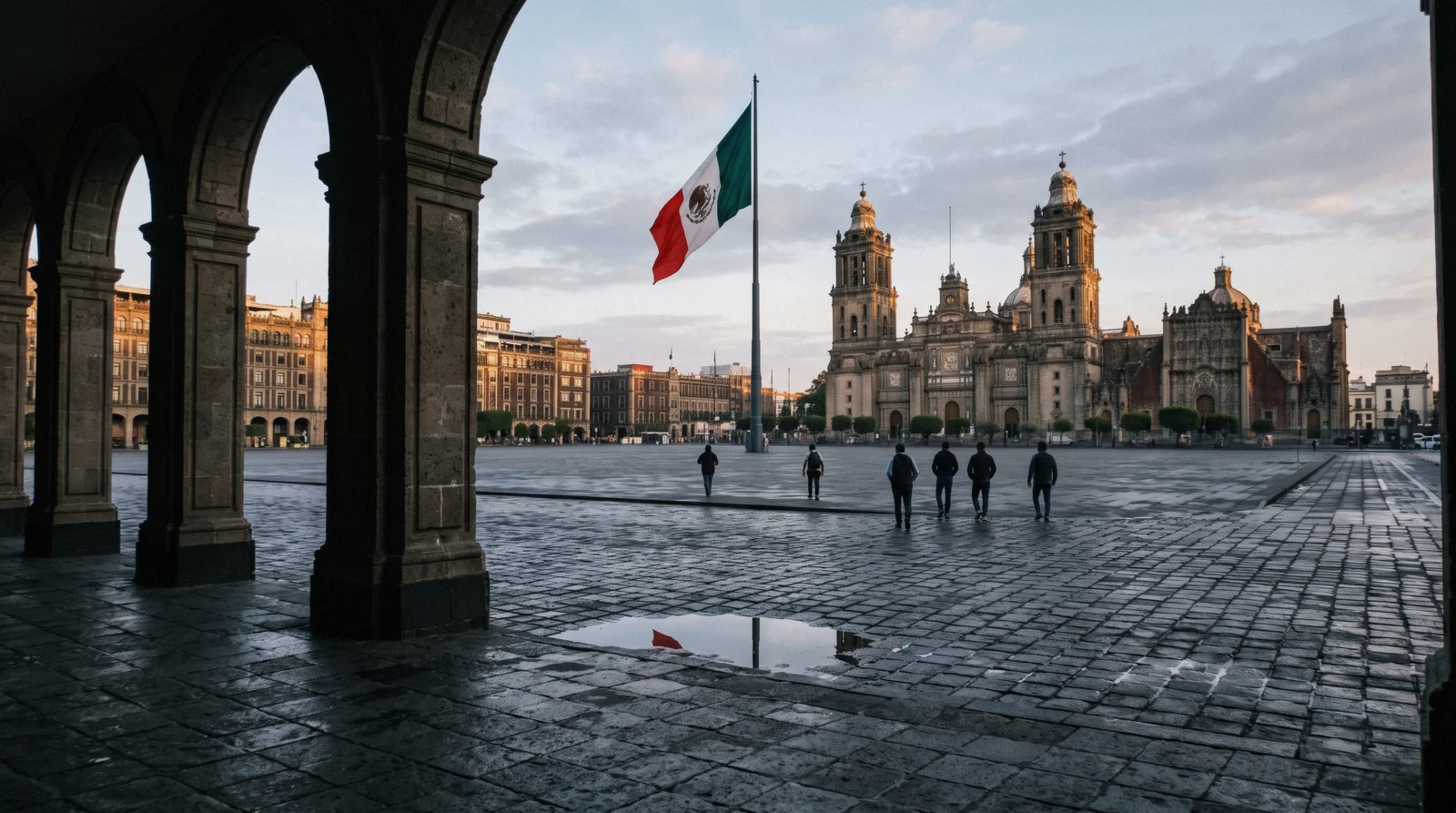
The Zócalo
The Zócalo, Mexico City's main square — officially the Plaza de la Constitución — is the paved rectangle at the centre of the capital and one of the largest city squares in the world. It has been the ceremonial centre of the Mexica capital, the parade ground of New Spain and the stage of every national argument since: the flag goes up at dawn and comes down at dusk, and on any given week it may hold a concert, a protest or an ice rink. The cathedral stands on its north side, the president's palace on the east, and the excavated Templo Mayor at its north-east corner. Free, open, and never closed.
Quick answer What is on it, what it costs, and when to stand there
The Zócalo is free, open at every hour, and surrounded by four things worth an hour each: the Metropolitan Cathedral, the Palacio Nacional with Diego Rivera's murals, the excavated Templo Mayor and the streets behind them. The army raises the flag in the morning and lowers it in the evening, which is the square's daily set piece.
Key takeaways
- The cathedral is free to enter and the Palacio Nacional murals are free with a passport or ID at the door — bring the document, not a photograph of it
- The Templo Mayor at the north-east corner is the only paid ticket on the square, and it closes on Mondays
- The square is used: concerts, protests, the 15 September Grito, an ice rink in December — check before you plan a photograph of empty paving
- Everything here is inside eight blocks of the Centro Histórico, which is where a first day in the city belongs
- The rest of a first visit, in the order it works, is on the Mexico City city guide
Key facts
Opening hours
| The square itself | 00:00–24:00 |
|---|
Closed None — the square is public space
Admission
- Adult
- Free
- Free
- The square, the cathedral nave and the Palacio Nacional murals with ID
Planning it
- Time needed
- Not stated; our routing: 1 hour for the square and cathedral, 3 hours with the palace and the Templo Mayor
- Book ahead
- Optional — walk-up usually fine
- Address
- Plaza de la Constitución, Centro Histórico, 06000 Ciudad de México
What Costs What On The Square
Three of the four things on the Zócalo are free; one is not. Prices read on 30 August 2026 and converted at US$1 = MX$17.0. The official links carry no tracking of ours.
| What | Price | Includes | Cancel | Book |
|---|---|---|---|---|
| The square itself | Free | Open at every hour, every day | — | Official site |
| Metropolitan Cathedral, nave | Free | The nave and chapels; tower visits arranged inside | — | Official site |
| Templo Mayor and its museum | MX$210 foreign / MX$105 resident | The excavation walkway and the eight-room museum | Not stated by INAH | Official site |
| Guided walk of the historic centre | Listed at $27.01 | Three hours on foot; entries not included | Free up to 24 hours before | Check Availability |
The Palacio Nacional murals are free with a passport or official ID at the gate when the building is open to visitors, which changes without notice.
What The Square Is, And What It Was
Three layers of city, stacked on the same 240 by 220 metres.
Under the paving is the ceremonial precinct of Tenochtitlan, the Mexica capital that stood on an island in a lake until 1521. The Spanish did not build beside it; they built on it, using its stone. The cathedral went up over the sacred precinct, the viceroy's palace over Moctezuma's, and the lake was drained over three centuries — which is why the whole centre is sinking, visibly, and why the cathedral's floor slopes.
Why it is called the Zócalo
In the 1840s a monument to independence was begun in the middle of the square and abandoned at the plinth — the zócalo. The plinth stayed for decades, the name stuck, and it spread: main squares all over Mexico are now called zócalos after a monument that was never built here.
The flag
A single enormous flag stands in the centre. Soldiers of the presidential guard raise it in the morning and take it down in the evening with a slow ceremony that stops traffic across the square; the exact times shift with the season and the calendar, so treat it as a morning-and-evening event rather than a scheduled show. It is the reason to be here at 08:00 rather than at noon.
The Four Buildings On The Square
What each one is, what it costs and how long it takes. Prices read on 30 August 2026.
Metropolitan Cathedral, north side. Built between 1573 and 1813, which is why it changes style as you look up. Free to enter the nave; the bell towers and the crypt are shown on guided visits arranged inside.
The cathedral publishes its schedule as images rather than as text on its own site, so we do not print visiting hours we could not read — the times are posted at the door and mass takes priority over sightseeing.
| Building | Side | Entry | Time needed |
|---|---|---|---|
| Metropolitan Cathedral | North | Free | 30–45 min |
| Palacio Nacional | East | Free with passport or ID | 1 h for the murals |
| Templo Mayor | North-east corner | MX$210 / MX$105, closed Mondays | 2 h with the museum |
| Portal de Mercaderes and the arcades | West | Free | As long as the coffee takes |
Palacio Nacional, east side, is still the president's working palace, which is why access changes without notice: the murals on the main staircase — Rivera's account of Mexican history from Tenochtitlan to the Revolution — are free with photo ID at the gate when the building is open to visitors. Ask before you queue; the palace page has what we know and what we do not.
The Templo Mayor, at the corner, is the Mexica great temple, uncovered after an electricity crew hit a monolith in 1978, with its own museum behind. It is the only paid entry on the square and the one that makes the other three make sense.
The Cathedral, In The Detail That Repays A Look
Two hundred and forty years of building, on ground that will not hold still.
Work began in 1573 and finished in 1813, which is why the facade is Renaissance at the bottom, Baroque in the middle and Neoclassical at the top — you can read the change of taste vertically. Inside, the two great retablos behind the altar are the reason to walk to the far end: the Altar of the Kings, gilded and dense enough to be exhausting, and the Altar of Forgiveness in front of it. The organs above the nave are among the largest colonial instruments anywhere.
The floor slopes, and it is not your eyes. The whole centre stands on the drained bed of Lake Texcoco and has been sinking for four centuries; the cathedral has been shored, jacked and stabilised repeatedly, most seriously in the 1990s, and a plumb line hung from the dome inside shows the tilt. It is the most legible piece of evidence in the city that the ground here is not ground at all.
Entry to the nave is free. Guided visits to the bell towers and the crypt are arranged inside the building rather than online, and services take priority over sightseeing — the cathedral publishes its schedule as images on its own site rather than as text, so we do not print hours we could not read. What is reliable: mornings are calmer, and the north-side entrance is the one that is usually open.
When To Stand Here
The square changes character four times a day and completely on certain dates.
08:00 is the quietest hour and the flag is going up. Midday is full of school groups, vendors and, most days, some kind of installation. Dusk is when the buildings are lit and the flag comes down. Sunday brings families and the biggest crowds, and it is also the day the INAH museums are free for nationals and residents, so the Templo Mayor is at its fullest.
Dates to know: the night of 15 September, when the president gives the Grito from the palace balcony to a packed square and the centre is closed off from the afternoon; 1 and 2 November, when the Day of the Dead installation and the parade route pass through; and December, when an ice rink and a Christmas market take the middle of it. The dates that change a trip has the rest.
Eating, Coffee And The Rooftops Around The Square
The square itself sells nothing worth eating; two streets away is a different matter.
The arcades on the west side hold the cheapest sit-down coffee with a view of the paving, and the terrace restaurants above them — reached through the hotels on that side — are the ones with the photograph everyone takes of the cathedral at dusk. Prices there are for the view rather than the food.
Walk two blocks and it changes: Calle 5 de Mayo and the streets towards Bellas Artes are lined with cantinas and taquerías, and the Mercado de San Juan, fifteen minutes west, is where the city's cooks buy. A food walk through the Centro is the shortcut if the menus are unfamiliar; where to eat has the named places with the guides that list them.
Getting To The Square
The metro comes out onto the paving, which makes this the easiest arrival in the city.
Metro Zócalo on Line 2 exits directly onto the square — the station is beneath it, and the flag is the first thing you see coming up the stairs. Metro fares are MX$5 a trip on the operator's published tariff. From Roma or Condesa an app car takes 15 to 30 minutes depending on the hour; from Coyoacán, 40 minutes and up.
Driving into the Centro is a mistake: much of it is pedestrianised, the rest is one-way, and parking is scarce and expensive.
Once you are here the whole Centro Histórico is walkable, and flat: Bellas Artes is twelve minutes west, the Templo Mayor is at the corner, and the Torre Latinoamericana viewpoint is on the way to the palace of fine arts. Getting around covers the rest of the network.
The Square After Dark, And The Streets Behind It
The Centro empties in a way the rest of the city does not, and it is worth knowing where the edges are.
Lit up, the square is at its best: the cathedral floodlit, the palace facade in warm light, the flag down and the paving nearly empty by nine. The blocks immediately west, towards Bellas Artes, stay busy with cantinas and street food well past that. The blocks north and east do not: offices and wholesale streets that close at six and thin out fast.
The practical version: stay on the lit pedestrian streets — Madero, 5 de Mayo, Regina — take an app car rather than walking out of the Centro late, and treat the crowd around the metro exits the way you would any crowded station anywhere. Residents will name Tepito, a few blocks north-east, as the area to stay out of; it is not somewhere a visitor has any reason to be.
If you want the square at its emptiest rather than its liveliest, come back at eight in the morning instead. Between the flag going up and the first coach parties there is about an hour when four centuries of buildings stand around an almost empty rectangle, and it is the best photograph in the Centro.
The Zócalo And What Is On It
The four sides of the square, the Templo Mayor entrance and the metro station beneath it.
Walking The Centre With A Guide
Where the history around the square is the product. Prices as listed on 30 August 2026.
 from $27.01
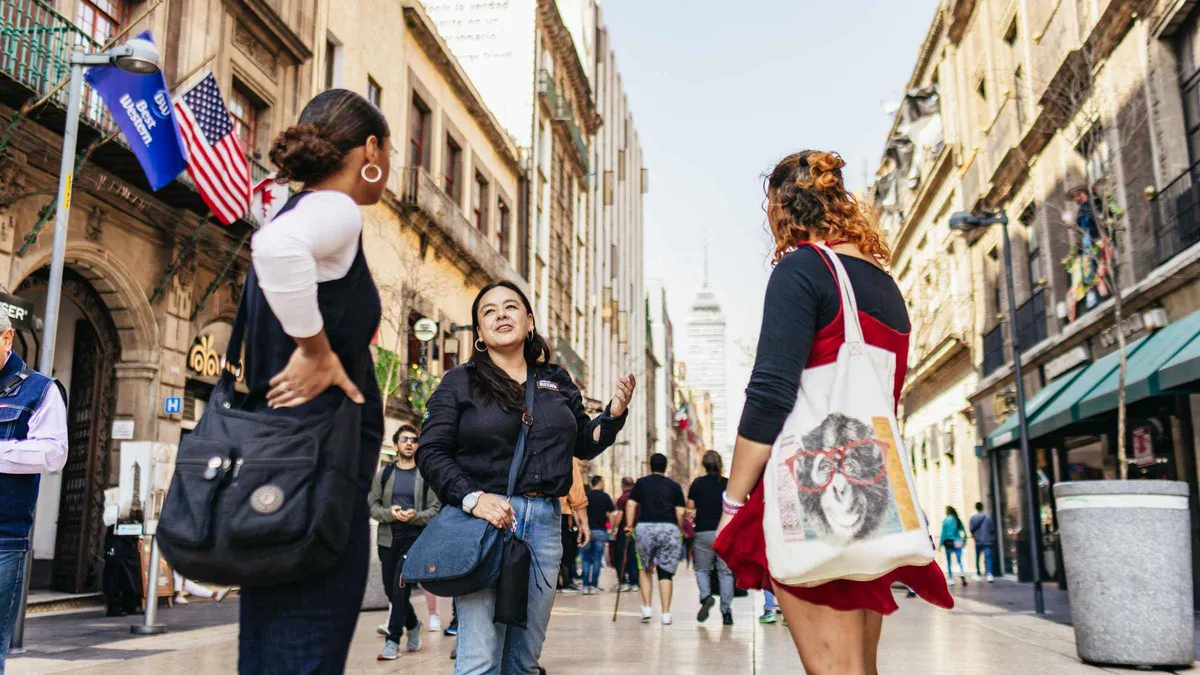
Mexico City: Historic Downtown Walking Tour
Listing details checked 2026-08-30
Three hours on foot through the Zócalo, Bellas Artes and the streets between them, with the history attached.
Check Availability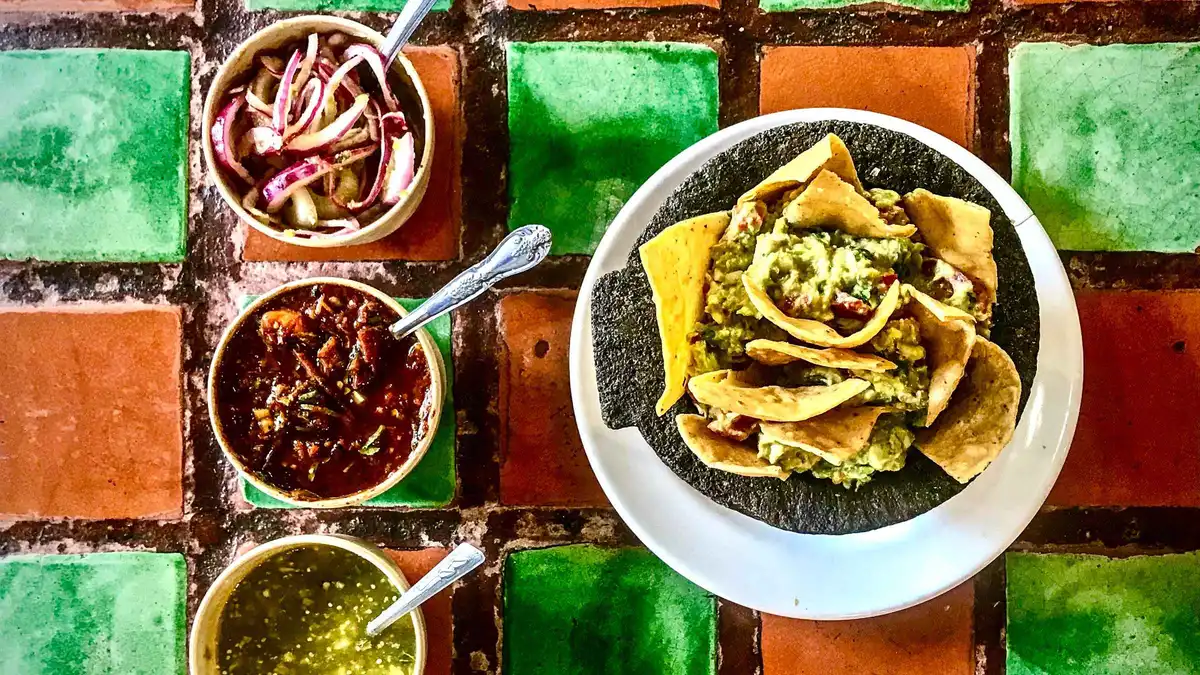 from $88.10
Mexico City: Old Town Food Tour of 7 Tastings & Secret Dish
Listing details checked 2026-08-30
Seven tastings through the Centro Histórico, ending with you able to order for yourself.
Check Availability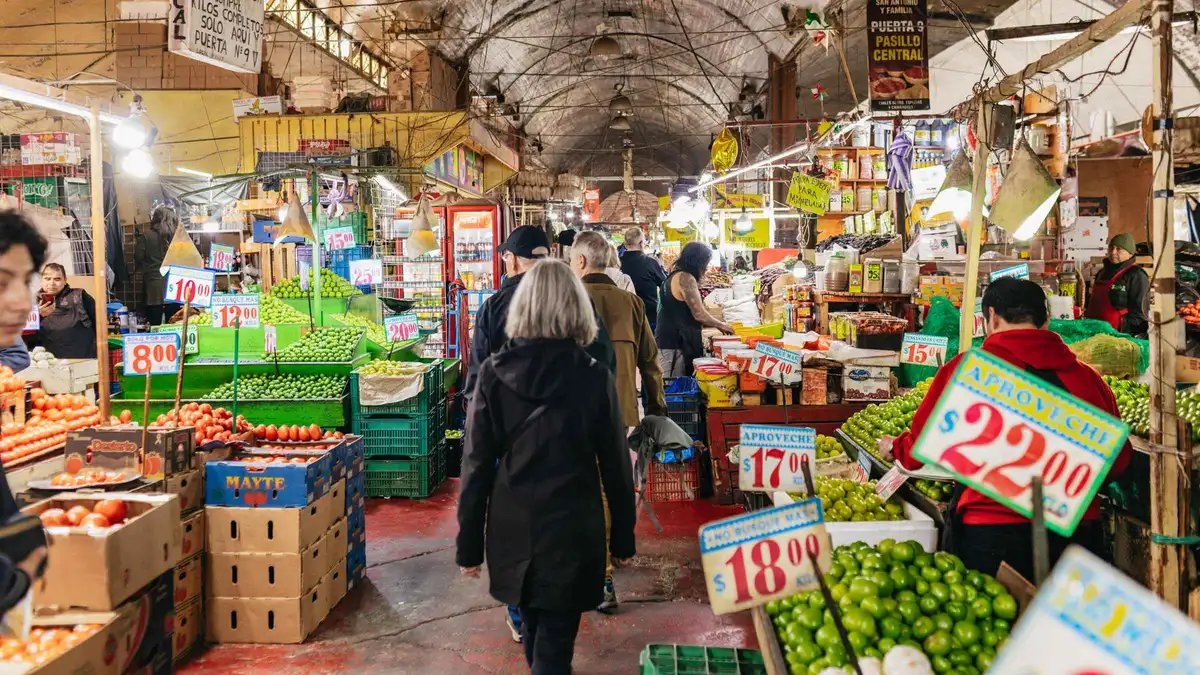 from $88.05
Mexico City: Local Food Tour at Mexico’s 2nd Largest Market
Listing details checked 2026-08-30
A market morning through La Merced and Sonora, the city's second-largest market complex.
Check AvailabilityNext Stop From The Zócalo
Walk minutes are our estimates from the GPS distances.
Templo Mayor
The Mexica temple under the corner of the square, with the museum that holds what came out of it.
2 min walkPalacio de Bellas Artes
Marble, Art Deco and the mural floor — MX$95, and free on Sundays to everyone.
12 min walk westCentro Histórico
The district around the square: what else is worth the walk, and where to eat between the buildings.
You are in itZócalo Questions
What is the Zócalo in Mexico City known for?
Being the ceremonial centre of three cities in one place: the Mexica capital whose Templo Mayor is excavated at its corner, the viceregal capital whose cathedral and palace stand on two of its sides, and the modern republic whose president gives the Grito from the balcony every 15 September. It is also one of the largest public squares in the world, and free.
Is the Zócalo worth visiting?
Yes, though not as a square to admire — it is bare paving with a flag in the middle. It is worth it for what stands on it: the cathedral, the Rivera murals in the Palacio Nacional, and the Templo Mayor. Give the four buildings three hours between them and the square makes sense.
How much does it cost to visit the Zócalo?
The square is free and never closes; the cathedral is free; the Palacio Nacional murals are free with a passport or official ID at the gate. The only paid entry is the Templo Mayor at MX$210 for a foreign visitor and MX$105 for nationals and residents.
What is happening at the Zócalo today?
Something, usually. The square hosts concerts, national ceremonies, protests, the Day of the Dead installation and a December ice rink, and it is closed to the public for the Grito on the night of 15 September. If your plan depends on empty paving, check the city's own events listing before you go — this is a working square, not a monument.
Is the Zócalo safe, and which streets around it should I avoid?
The square is the most policed public space in the country and busy from early morning to late evening; the ordinary care applies, which here means pickpocketing in crowds and around the metro exits. The danger zones people ask about are not on the square: the streets north and east of it thin out quickly after dark — Tepito, a few blocks north-east, is the one every resident names — and the advice from every consular source is to use an app car rather than walk out of the Centro at night. Our safety page sets out what the US State Department's Level 2 advisory actually says, district by district.
Where This Fits In A Day
It is the first hour of a first day, and the buildings around it are the rest of the morning.
Arrive at 08:00 for the flag and an empty square, do the cathedral, then the Templo Mayor when it opens at 09:00, and the Palacio Nacional murals after that. By midday you are ready to walk west to Bellas Artes for lunch and the mural floor. That is the morning half of the one-day itinerary and it costs one MX$210 ticket.
The rest of the city, and the order to take it in, is on the Mexico City city guide.
The Square On Film
Three walk-throughs that show the scale of the paving and what happens on it.
Mexico City travel guide 2026
Includes the Centro and the square at street level.
Video: Martijn Around The WorldMexico City tips for first timers
Practical points about the centre, transport and money.
Video: Happy to WanderHow to travel CDMX
How to reach the Zócalo on the Metro, and what it costs.
Video: Wanderlust WellmanVideos load from YouTube only when you press play.
Page last reviewed 2026-08-30. Prices, hours and terms are set by the venue or operator and confirmed at checkout.
We may earn a commission if you book through one of our links, at no extra cost to you. Full affiliate disclosure