 Visit Mexico City Guide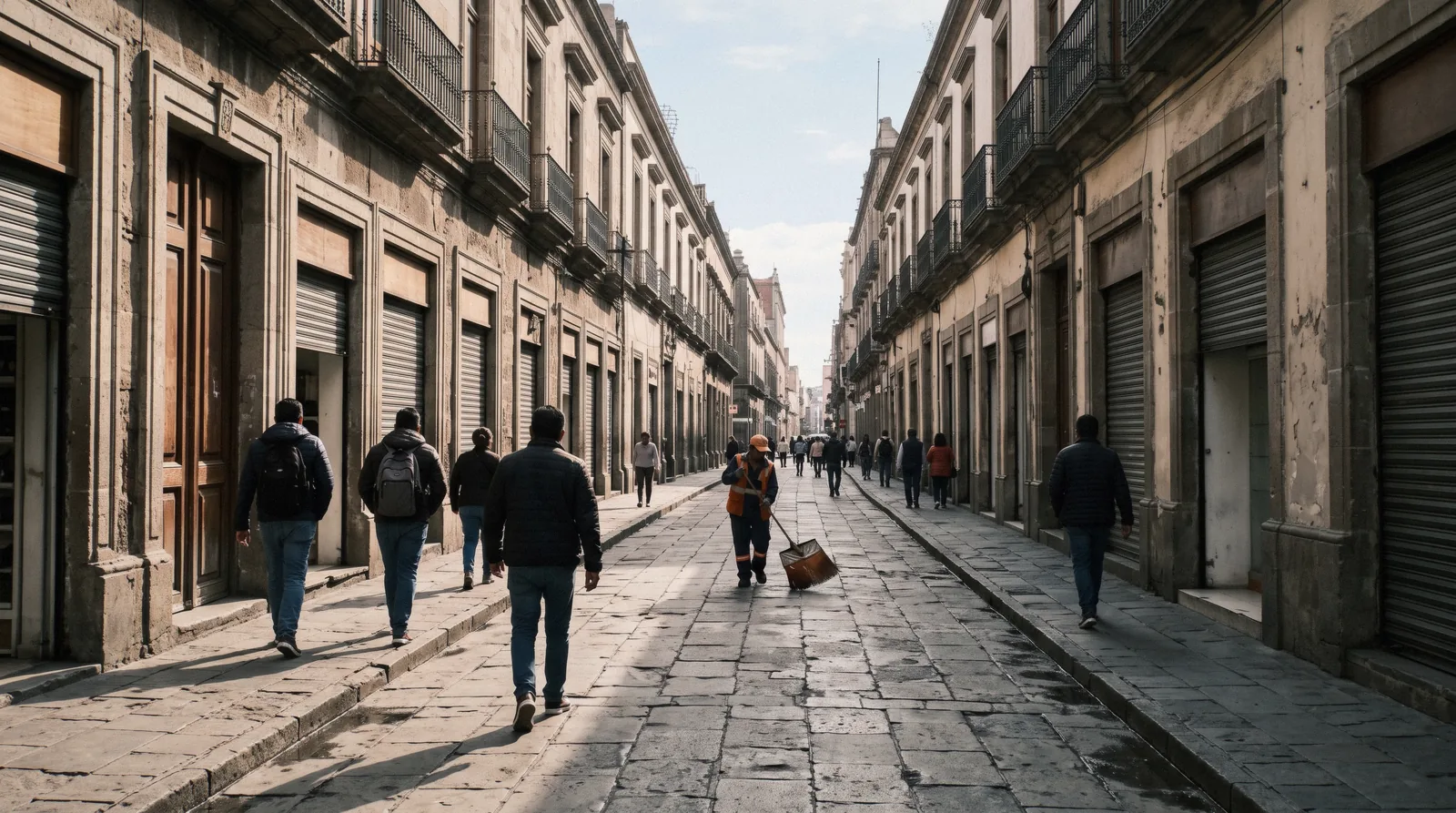
Centro Histórico
The Centro Histórico, Mexico City's oldest quarter, is where the city has been since 1325: the Mexica ceremonial precinct, the colonial capital built on top of it, and nine square kilometres of streets that UNESCO listed in 1987 along with Xochimilco. Almost everything a first visit does in the daytime is inside it or a metro ride from it — the Zócalo, the Templo Mayor, Bellas Artes, the Torre Latinoamericana — and it is also the cheapest district in this guide to sleep in.
Quick answer What is here, whether to stay, and how it feels after dark
The Centro Histórico holds the Zócalo, the cathedral, the Templo Mayor, the Palacio Nacional, Bellas Artes and the Torre Latinoamericana inside a walkable dozen blocks. It is the cheapest of the four districts visitors stay in, the busiest by day and the quietest after about nine at night.
Key takeaways
- Madero is pedestrianised from the Zócalo to Bellas Artes — twelve minutes end to end, and it is the spine of the district
- Rooms here ran $42–93 a night midweek in mid-October, against $95–197 in Polanco — the comparison is below
- Two INAH tickets and one INBAL ticket cover almost everything paid here: MX$210 at the Templo Mayor, MX$95 at Bellas Artes, MX$220 up the tower
- It empties at night: stay on the lit pedestrian streets, and take an app car rather than walking out of the district late
- This is day one of the independent Mexico City guide, whatever else the trip holds
The Centro Against The Other Three Districts
Where visitors actually stay, compared on the four things that decide it. Nightly bands are the middle half of the rates Google Hotels returned on 30 August 2026 for a midweek night, Wednesday 14 to Thursday 15 October, two adults.
| District | Room band | Walk to the Zócalo | Suits |
|---|---|---|---|
| Centro Histórico | $42–93 | You are in it | Sightseeing, short trips, small budgets |
| Roma Norte | $56–167 | 25 min by Metrobús | Restaurants, bars, tree-lined walking |
| Condesa | $58–106 | 30 min | The same, quieter and greener |
| Polanco | $95–197 | 30 min | Quiet, expensive, next to Chapultepec |
| Coyoacán | $57–126 | 40 min | A village day, not a base |
Bands are rates for one midweek night in October and move sharply for Día de Muertos, mid-December and Semana Santa. Where to stay has the full comparison.
Walking The District With A Guide
Where the history between the buildings is the product. Prices as listed on 30 August 2026.
 from $27.01
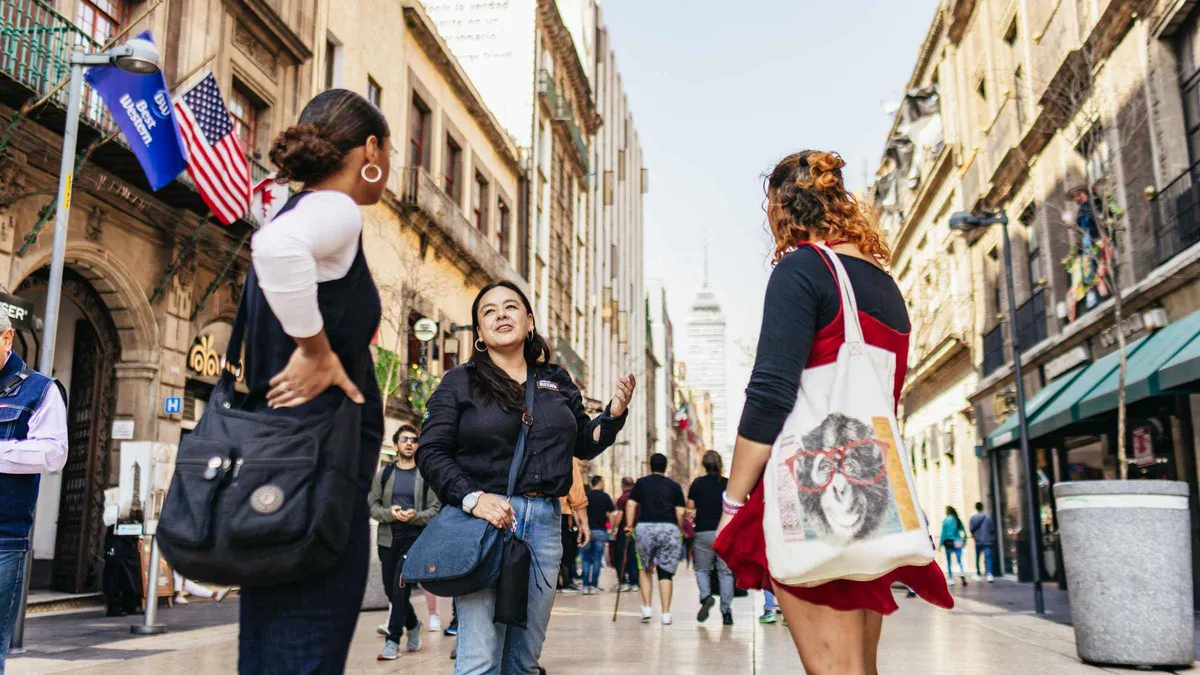
Mexico City: Historic Downtown Walking Tour
Listing details checked 2026-08-30
Three hours on foot through the Zócalo, Bellas Artes and the streets between them, with the history attached.
Check Availability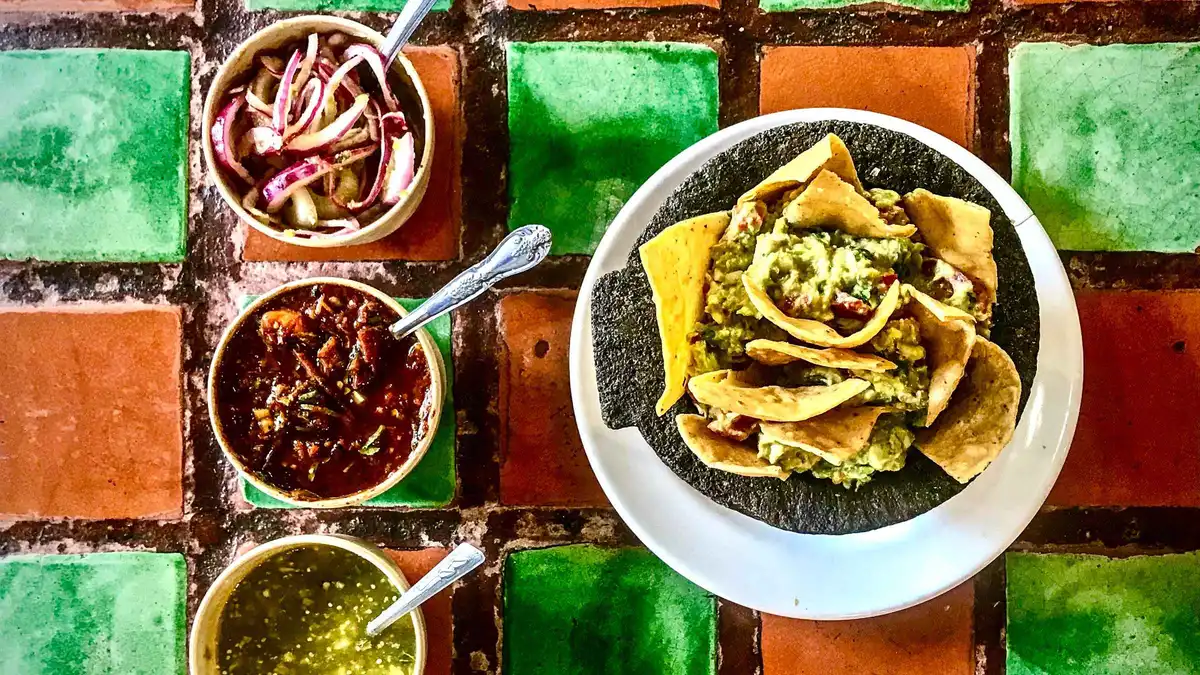 from $88.10
Mexico City: Old Town Food Tour of 7 Tastings & Secret Dish
Listing details checked 2026-08-30
Seven tastings through the Centro Histórico, ending with you able to order for yourself.
Check Availability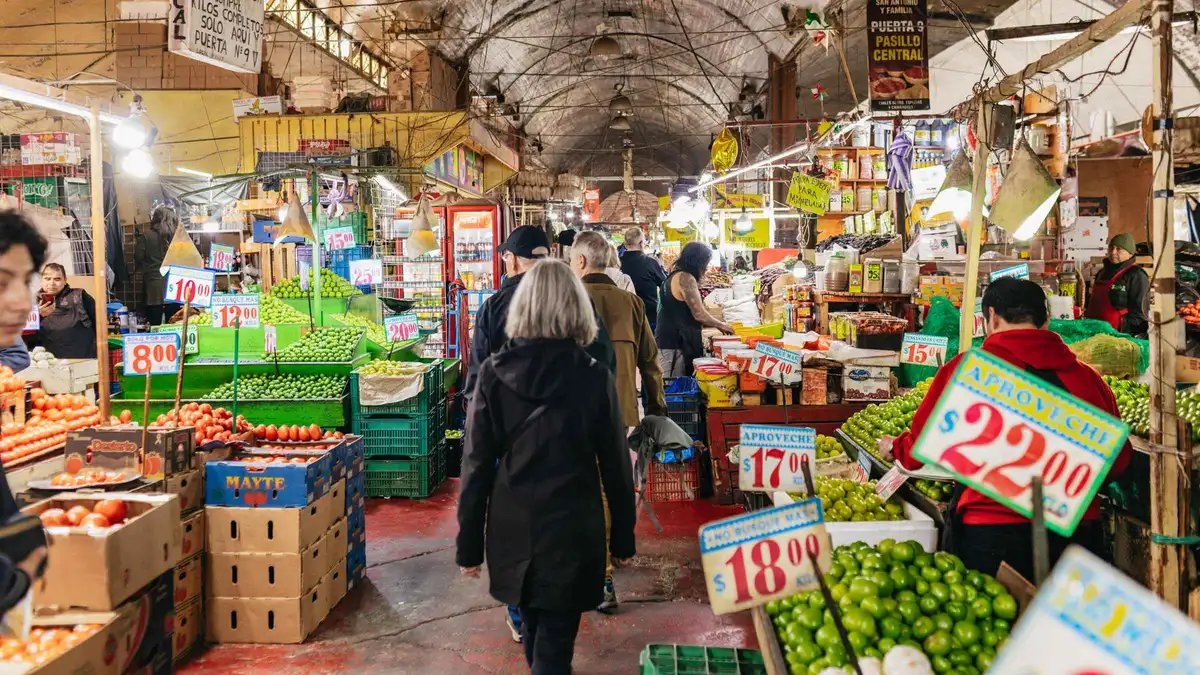 from $88.05
Mexico City: Local Food Tour at Mexico’s 2nd Largest Market
Listing details checked 2026-08-30
A market morning through La Merced and Sonora, the city's second-largest market complex.
Check AvailabilityWhat Is Actually In The Centro
Six paid sights, three free ones, and a street that connects most of them.
The spine is Calle Madero, pedestrianised from the Zócalo to the Palacio de Bellas Artes — twelve minutes at a walk, with the Casa de los Azulejos, the seventeenth-century house tiled in blue and white, about halfway along. Off it: the Templo Mayor at the Zócalo's north-east corner, the cathedral, the Palacio Nacional with Rivera's staircase, and the Torre Latinoamericana at the western end.
Further out but still inside the district: the Museo Nacional de Arte with the Mexican collection from the colonial period to 1954, the Alameda Central — the oldest public park in the Americas, laid out in 1592 — and the Mercado de San Juan, the market cooks buy from. North of the Zócalo the streets turn wholesale: whole blocks selling lightbulbs, then wedding dresses, then piñatas, which is one of the more entertaining hours in the city.
What is not here: Chapultepec and the Anthropology Museum are five kilometres west, Coyoacán and the Casa Azul twelve south. The Centro is one day of a four-day trip, not the whole trip.
The Ground Everything Stands On
One fact explains half the buildings in this district.
The Spanish built the colonial capital directly on top of Tenochtitlan and then drained the lake it stood in. The clay bed beneath has been compacting ever since, and the whole Centro is sinking — unevenly, which is why the cathedral's floor slopes, the Bellas Artes entrance sits several steps below the street it was built to face, and doorways along Madero are cut at angles you notice once you start looking.
It is also why the Torre Latinoamericana matters: when it went up in 1956 nobody believed a tall building could stand here, and it has survived the 1957, 1985 and 2017 earthquakes since. Walking the Centro with the sinking in mind turns a pretty district into a legible one.
A Day In The Centro, Hour By Hour
Our routing, built from the opening times on the pages linked below. One MX$210 ticket, one MX$95 ticket and one MX$220 ticket cover the paid half of it.
The order is set by two constraints: the Templo Mayor opens at nine and the Torre Latinoamericana stays open until ten, so the day runs east to west and ends high.
| Hour | Where | Cost | Why then |
|---|---|---|---|
| 08:00 | Zócalo, the flag going up | Free | The only hour the square is empty |
| 09:00 | Templo Mayor, ruins then museum | MX$210 | It opens at nine and the walkway is narrow |
| 11:00 | Cathedral, then the Palacio Nacional murals | Free | Ask at the gate; access varies by day |
| 13:00 | Lunch at Mercado de San Juan or a cantina off Madero | MX$120–300 | The local comida hour starts at two |
| 15:00 | Walk Madero west to Bellas Artes | MX$95 | Twelve minutes, pedestrianised; free on Sundays |
| 17:30 | The free terrace across Eje Central | Coffee | The dome photograph, before the light goes |
| 19:00 | Up the Torre Latinoamericana | MX$220 | The city lit, and nothing else is open |
That is the whole of the one-day itinerary, and it works in reverse if you are starting late — the only fixed points are the nine o'clock opening and the Monday closure at the Templo Mayor.
After Dark, And Where The Edges Are
The Centro is not a nightlife district, and knowing that in advance saves an evening.
Offices and wholesale streets empty at six, and by nine the area between the Zócalo and the Alameda is quiet. The exceptions are the pedestrian streets — Madero, Regina, 5 de Mayo — the historic cantinas, and the taquerías around Independencia, which stay busy. That is where to be.
Where not to be: the blocks north and east of the Zócalo thin out fast after dark, and every resident will name Tepito, a few blocks north-east, as the one to stay out of — it is not somewhere a visitor has any reason to go. The general advice from consular sources and locals alike is to use an app car rather than walk out of the district at night, and to treat crowds around the metro exits the way you would any crowded station. Our safety page has what the advisories actually say.
Staying Here: What You Get And What You Give Up
The cheapest beds in the guide, and the trade that comes with them.
What you get: the lowest rates of the four districts, everything in the daytime plan on your doorstep, Metro Lines 1, 2, 3 and 8 within a few blocks, and a genuine sense of being in the historic city — the Gran Hotel's stained glass, colonial courtyards, church bells at seven.
What you give up: evenings. Dinner and drinks mean a taxi to Roma Norte most nights. Noise from the street and from services is real in the older buildings. And the district is loud by day in a way Polanco and Condesa never are.
The honest recommendation: stay here for two or three nights if the trip is short and sightseeing-led, or if budget matters. Stay in Roma Norte if you want the evenings to happen where you sleep. Where to stay compares all five.
What A Room Costs In And Around The Centro
The band is the middle half of the rates Google Hotels returned on 30 August 2026 for a midweek night, Wednesday 14 to Thursday 15 October, two adults, room only. Rates move sharply for Día de Muertos and mid-December.
Centro Histórico
- Walking distance
- Inside the district; the Zócalo is the centre of it
- Typical double
- $42–93 (median $68)
- Suits
- Sightseeing days, short trips, small budgets
Cheapest of the four, and the one you leave in the evening.
See stays in Centro HistóricoAlameda and Bellas Artes
- Walking distance
- 12 minutes from the Zócalo along Madero
- Typical double
- $42–93 (median $68)
- Suits
- The western end, next to the park and the tower
Same band as the Centro, a slightly quieter edge of it.
See stays in Alameda and Bellas ArtesRoma Norte, for comparison
- Walking distance
- 25 minutes by Metrobús
- Typical double
- $56–167 (median $115)
- Suits
- Evenings where you sleep
About $47 a night more at the median, for a district that is alive at ten.
See stays in Roma Norte, for comparisonRates read on 30 August 2026 from Google Hotels for the dates above. We may earn a commission if you book through these links, at no extra cost to you.
Centro Histórico Map
The spine along Madero, the six sights on it, and the metro lines under them.
From The Centro
Times by metro or car on a weekday.
Chapultepec and the Anthropology Museum
The other museum day, five kilometres west — the museum and the castle fill it.
25 min by metroRoma Norte
Where to eat dinner if you are sleeping in the Centro, and the district most visitors end up preferring.
25 min by MetrobúsCentro Histórico Questions
Is it worth staying in the Centro Histórico?
For a short, sightseeing-led trip, yes: it is the cheapest of the four districts — $42–93 midweek against $95–197 in Polanco — and everything in the daytime plan is on foot. The trade is the evening, which happens in Roma Norte and means a taxi. The full comparison is above.
Is the Centro Histórico safe?
By day it is busy, heavily policed and fine, with pickpocketing in crowds the realistic risk. At night it empties: stay on the lit pedestrian streets — Madero, Regina, 5 de Mayo — and take an app car rather than walking out of the district. The blocks north-east, around Tepito, are the ones residents tell you to avoid. What the advisories say is on its own page.
What is there to do in the Centro Histórico?
The Zócalo and cathedral, the Templo Mayor, the Rivera murals in the Palacio Nacional, Bellas Artes, the Torre Latinoamericana deck, the Alameda and the Mercado de San Juan — most of them within twelve minutes of each other on foot. Our hour-by-hour day puts them in order.
How many days do you need in the Centro Histórico?
One full day covers the essentials at a comfortable pace; two if you want the Museo Nacional de Arte, the wholesale streets north of the Zócalo and a cantina evening. The one-day itinerary is built entirely inside the district.
Is the Centro Histórico walkable?
Yes, and it is the flattest walking in the city — Madero is pedestrianised end to end and the six main sights sit within a dozen blocks. The complications are crowds on Madero at weekends, uneven paving from the subsidence, and the fact that everything beyond the district is genuinely far.
Where This Fits In A Trip
Day one, whatever else you do.
Start here: the Centro is where the city's three layers are stacked in one square, and everything else in the guide makes more sense afterwards. Give it a full day, sleep here if the budget is tight or in Roma Norte if it is not, and keep Teotihuacán for the Monday when the museums close. The whole sequence is on the Mexico City city guide.
Walking The Centro
Three street-level walks that show the density better than any map.
CDMX Centro Histórico from the Zócalo to Reforma
The spine of the district, walked end to end.
Video: Walking ExpeditionMexico City's Centro Histórico walking tour
The main streets and squares at a visitor's pace.
Video: Janette Allen4K Mexico City walking tour
A long, uncut walk through the centre with captions.
Video: World WanderingsVideos load from YouTube only when you press play.
Page last reviewed 2026-08-30. Prices, hours and terms are set by the venue or operator and confirmed at checkout.
We may earn a commission if you book through one of our links, at no extra cost to you. Full affiliate disclosure