 Visit Mexico City Guide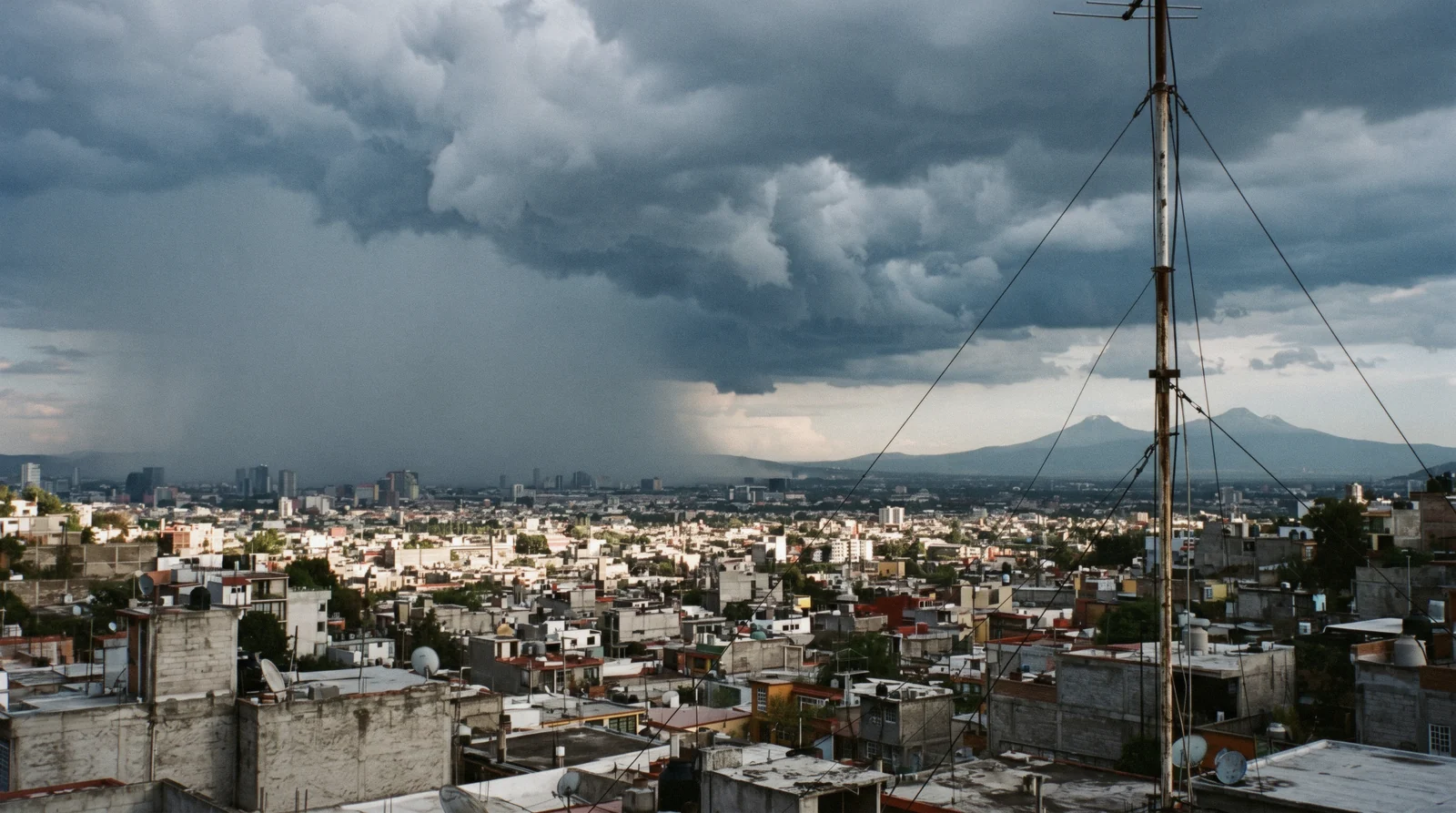
The Best Time To Visit Mexico City
The best time to visit Mexico City is decided by rain, not heat. There is no hot season here: at 2,240 metres the warmest month averages 25.8 °C and the coldest 20.6 °C, a range of five degrees across the year. What changes is water — a dry half from November to April and a wet half from June to September when it rains on roughly two days in three, almost always after four in the afternoon. The figures below are computed from the Open-Meteo ERA5 reanalysis for 1995 to 2024, not copied from another guide.
Quick answer Which months, why, and what to avoid
November to April is the dry half of the year and the easiest time to walk the city, with March and April the warmest and the most polluted. June to September is the rainy season: warm mornings, heavy afternoon storms, green landscapes and lower crowds. The city is comfortable in every month — the choice is between rain and haze.
Key takeaways
- Best overall: October and November — the rain has stopped, the air is washed, and the jacarandas of spring are the only thing you miss
- Avoid if you can: the last fortnight of December and 1–2 November, when rooms cost the most and the city is fullest
- The rainy season is not a washout: it rains after 16:00 and the mornings are usually clear
- Nothing here closes for a season — the Monday closures matter far more than the month you pick
- Which month you pick matters less than the Monday closures — the Mexico City city guide has the shape of a first visit
Mexico City Month By Month
Average daily high temperature by month in Celsius with the Fahrenheit reading underneath, computed from the Open-Meteo ERA5 reanalysis for 19.43 N, 99.13 W over 1995–2024 on 30 August 2026. The bands below the chart are the reading we take from it.
Averages, not forecasts. The full monthly table with rainfall and rainy days is directly below.
Every Month, With The Numbers
Thirty-year averages from the Open-Meteo ERA5 archive for the city centre, 1 January 1995 to 31 December 2024, computed on 30 August 2026. A rainy day counts any day with at least 1 mm.
| Month | High | Low | Rain | Rainy days |
|---|---|---|---|---|
| January | 20.6°C (69°F) | 6.9°C (44°F) | 18 mm | 3.7 |
| February | 22.8°C (73°F) | 7.9°C (46°F) | 17 mm | 3.4 |
| March | 24.6°C (76°F) | 9.4°C (49°F) | 28 mm | 5.8 |
| April | 25.8°C (78°F) | 11.3°C (52°F) | 45 mm | 8.5 |
| May | 25.6°C (78°F) | 12.3°C (54°F) | 69 mm | 11.6 |
| June | 23.4°C (74°F) | 12.9°C (55°F) | 148 mm | 18.0 |
| July | 21.6°C (71°F) | 12.2°C (54°F) | 180 mm | 23.9 |
| August | 21.6°C (71°F) | 12.4°C (54°F) | 183 mm | 23.1 |
| September | 20.9°C (70°F) | 12.2°C (54°F) | 186 mm | 21.3 |
| October | 20.7°C (69°F) | 10.5°C (51°F) | 91 mm | 12.8 |
| November | 20.8°C (69°F) | 8.7°C (48°F) | 28 mm | 5.9 |
| December | 20.6°C (69°F) | 7.5°C (45°F) | 15 mm | 2.8 |
The lows are the packing mistake most visits make: a January night at 7 °C at 2,240 metres needs a real jacket, whatever the daytime figure says.
What The Rainy Season Actually Does
Twenty-three rainy days in July sounds like a washout, and it is not.
From June to September the pattern is consistent enough to plan around: clear or bright mornings, cloud building through the early afternoon, and a heavy storm from about four, often violent for an hour and then finished. Streets flood at the low points, traffic seizes, and by seven the sky is usually clear again.
So a wet-season day works like this: museums and markets in the morning, lunch at two, something indoors or covered at four, and the evening back outside. Every itinerary in this guide is built that way — the three-day plan ends each day under a roof, and Xochimilco is scheduled for two rather than four.
What you gain in the wet months: the clearest air of the year, because the rain washes the valley — the volcanoes are visible far more often in August than in March — plus green hillsides, fewer visitors and lower rates. What you lose is the guarantee of a dry afternoon, and any plan that depends on one.
Month By Month, In Practice
The same twelve months, read as travel decisions rather than as numbers.
January–February. Dry, bright, cool nights at 7 °C. Quiet after the first week of January. Good walking weather and the lowest rain of the year.
March–April. The warmest and driest stretch, when the jacarandas turn the city purple in late March — and also the worst air of the year, with thermal inversions trapping ozone in the valley before the rains break. Semana Santa empties the city of locals and fills the roads out of it.
May. Hot by local standards, hazy, and the last dry month; the rains usually arrive in the second half.
June–September. The wet half: 148 to 186 mm a month, rain on 18 to 24 days, and the clearest air of the year between storms. September is the wettest month on the thirty-year average and also carries the Independence celebrations on the 15th and 16th.
October. The rain drops away, the air is still washed, and the city is not yet full. Our pick, with November.
November. Día de Muertos on the 1st and 2nd, the parade at the start of the month, and the busiest, most expensive days of the year — extraordinary if that is why you came, and to be avoided if it is not.
December. Dry and cool, with the posadas through the month and the Guadalupe pilgrimage on the 12th; the last fortnight is the year's other price peak.
The Dates That Change A Trip
Five fixed dates and one season, with what each does to prices, crowds and opening.
| Date | What happens | Effect on a visit |
|---|---|---|
| 1–2 November, Día de Muertos | Cemeteries, the Zócalo installation, the parade | The busiest and most expensive days of the year; book months ahead |
| 12 December, Guadalupe | Millions of pilgrims at the Basílica | The shrine is effectively closed to ordinary visits on the 11th and 12th |
| 15–16 September, Independence | The Grito from the palace balcony; 16 September a holiday | The Zócalo closes from the afternoon of the 15th; federal museums shut on the 16th |
| Semana Santa (the week before Easter) | Mexican families travel out of the city | The Centro empties; roads to Teotihuacán and Puebla fill |
| Around 21 March, spring equinox | Tens of thousands in white at Teotihuacán | Go another day; the pyramids are closed to climbing regardless |
| Late December | Posadas, the Zócalo ice rink, holidays | Prices peak; museums keep their normal days except 25 December and 1 January |
Nothing in this guide closes for a whole season. The weekly Monday closures and the handful of public holidays are what actually shut doors.
The Cheapest Months, And Why
Rates follow the calendar rather than the weather, which is useful.
The two price peaks are the Día de Muertos week at the start of November and the last fortnight of December, with Semana Santa a smaller third. The cheapest stretches are the rainy months — June to September — and the second half of January, once the holidays are over.
Because the weather is mild all year, the trade is unusually clean: paying less means accepting afternoon rain rather than accepting cold or heat. For a visitor whose days are museums, markets and one boat, that is a smaller sacrifice than it would be in a beach city. The hotel bands by district, read on Google Hotels for a midweek night in October, are on where to stay.
Two Things The Calendar Does Not Show
Altitude and air quality matter more than the month for most first visits.
Altitude. The city sits at about 2,240 metres in every month of the year. The first day is the one that bites — shortness of breath on stairs, a headache, alcohol landing harder — and no season changes that. The altitude page has what to do about it.
Air. The worst air is in the dry, still weeks of February to May, when thermal inversions hold ozone and particulates over the valley and the city occasionally declares environmental contingencies that restrict driving. The cleanest air is in the rainy months, which is the strongest single argument for visiting in the season everyone avoids.
What To Book Whatever The Month
The three things that are worth holding in any season. Prices as listed on 30 August 2026.
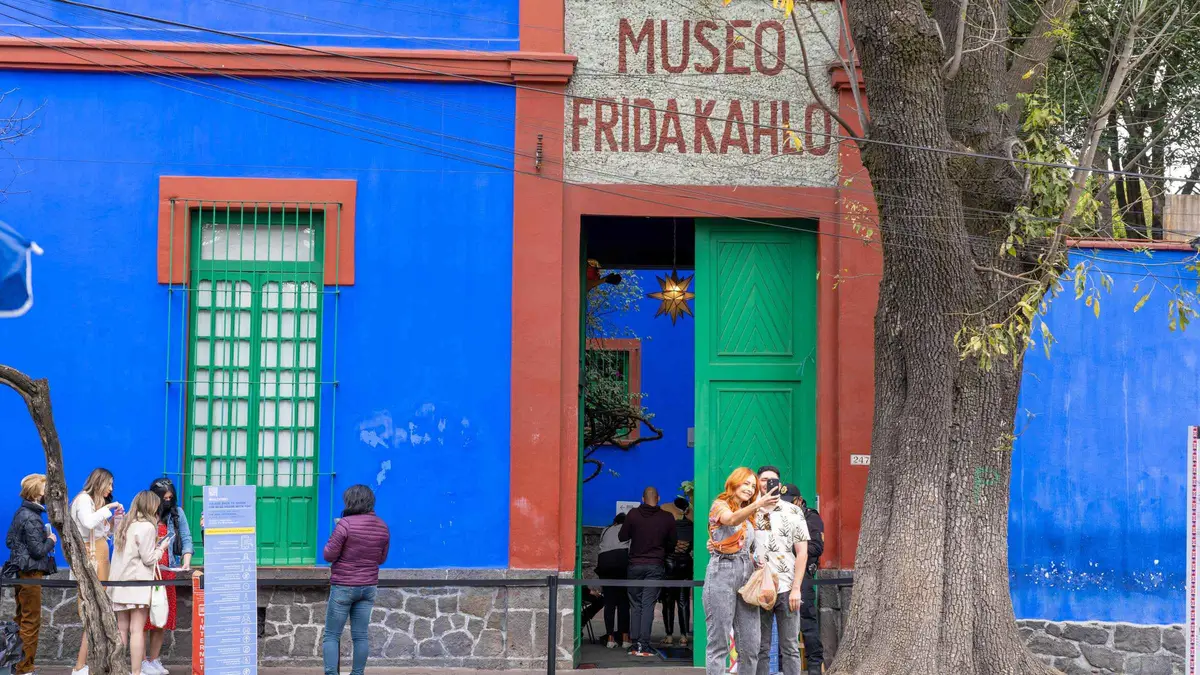 from $32
Mexico City: Frida Kahlo Museum or Casa Kahlo Entry Ticket
Listing details checked 2026-08-30
Timed entry to the Casa Azul with a digital guide — the museum sells no tickets at the door, so this is a slot as much as a…
Check Availability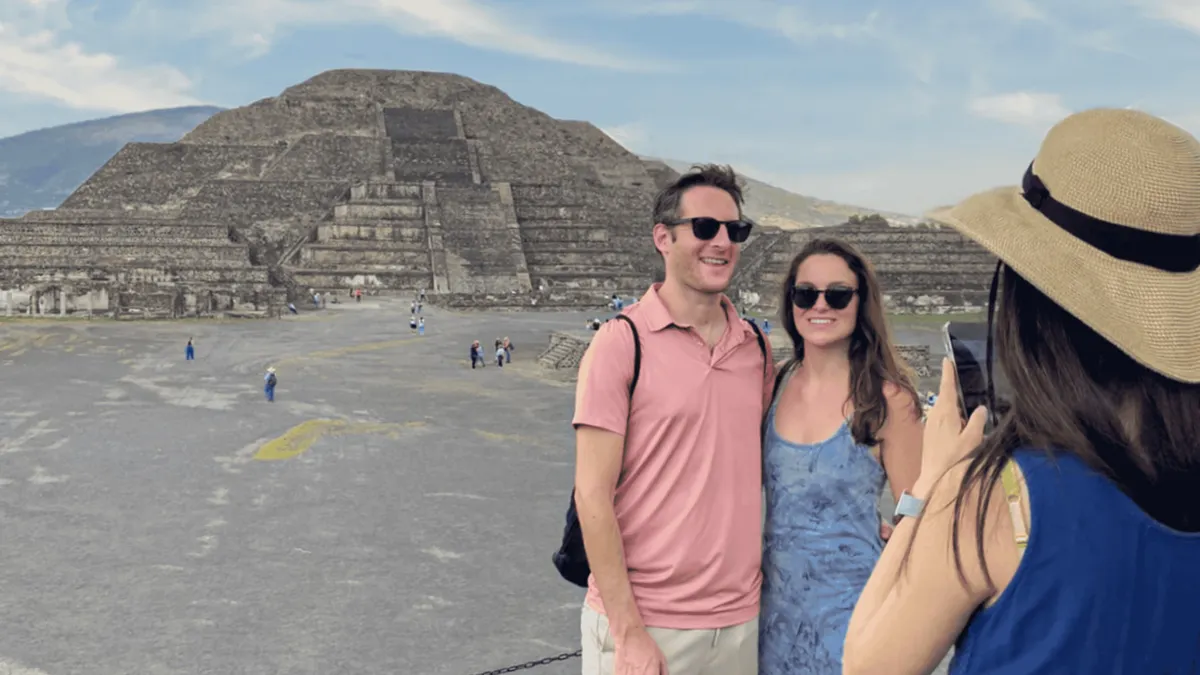 from $68
Mexico City: Teotihuacan Early Access Tour & Optional Lunch
Listing details checked 2026-08-30
Early access at the gate before the coaches arrive, with transport from the centre and a licensed guide.
Check Availability from $41.51
Xochimilco: Traditional Boat Sightseeing Tour, Culture and Fun.
Listing details checked 2026-08-30
A place on a shared trajinera with a guide, instead of negotiating a MX$750 boat at the embarcadero.
Check AvailabilityPlanning Pages This One Feeds
Once you have a month, these are the next three decisions.
What it costs
Entries, transport and food in a day, at the prices this guide checked.
MX$700–2,000 a dayWhat opens on a Monday
The weekly closure that matters more than the season.
Teotihuacán, the Basílica, the SoumayaWhen To Visit Mexico City: Questions
What is the best time to visit Mexico City?
October and November, on the numbers: the rains have stopped, the air is still washed clean, and the city is not yet in its Día de Muertos or Christmas peaks. March and April are drier and warmer but carry the worst air of the year. Every month is walkable — the warmest averages 25.8 °C and the coolest 20.6 °C.
What is the rainy season in Mexico City?
June to September, with 148 to 186 mm a month and rain on 18 to 24 days. The pattern is a bright morning and a heavy storm from about four in the afternoon, usually finished within the hour. It is the cheapest season, the greenest, and the one with the clearest air between storms — what it actually does to a day is above.
What is the worst time to visit Mexico City?
For crowds and prices, the Día de Muertos week and the last fortnight of December. For air quality, February to May, when inversions trap pollution over the valley. There is no month that is bad for weather — the range across the year is about five degrees.
What is the cheapest month to travel to Mexico City?
The rainy months, June to September, and the second half of January once the holidays end. Because the weather is mild all year, paying less here means accepting an afternoon storm rather than cold or heat — the reasoning is above.
Is September a good time to visit Mexico City?
It is the wettest month on the thirty-year average — 186 mm, 21 rainy days — and it holds the Independence celebrations on the 15th and 16th, when the Zócalo closes from the afternoon of the 15th and the federal museums shut on the 16th. Rates are low and the air is clean; plan indoor afternoons.
How many days in Mexico City is enough?
Four is the working minimum for a first visit: the Centro, Chapultepec, the southern day, and Teotihuacán — ideally on the Monday when the museums close. Three covers the city without the pyramids; the three-day itinerary sets out what that leaves out.
Picking A Month, In One Paragraph
If you want the short version.
Come in October or November for the best combination of dry weather and washed air, and book early if your dates touch Día de Muertos. Come in June to September if you want the lowest prices and do not mind planning your afternoons indoors. Come in March if you want the jacarandas and can live with the haze.
Whatever you pick, the day that matters more than the month is the Monday, which closes most of the museums — and the plan that works around it is the three-day itinerary, inside the wider Mexico City city guide.
The Seasons On Film
Three videos on timing a visit, from people who have done it in different months.
Best time to visit Mexico, month by month
A month-by-month run through the country's seasons.
Video: When To TravelWhen is the best time to visit Mexico City?
A resident's view of the seasons in the capital.
Video: Mexico News Daily TV46 tips I wish I knew before visiting Mexico City
Practical points, several of them about weather and altitude.
Video: Camden DavidVideos load from YouTube only when you press play.
Page last reviewed 2026-08-30. Prices, hours and terms are set by the venue or operator and confirmed at checkout.
We may earn a commission if you book through one of our links, at no extra cost to you. Full affiliate disclosure