 Visit Mexico City Guide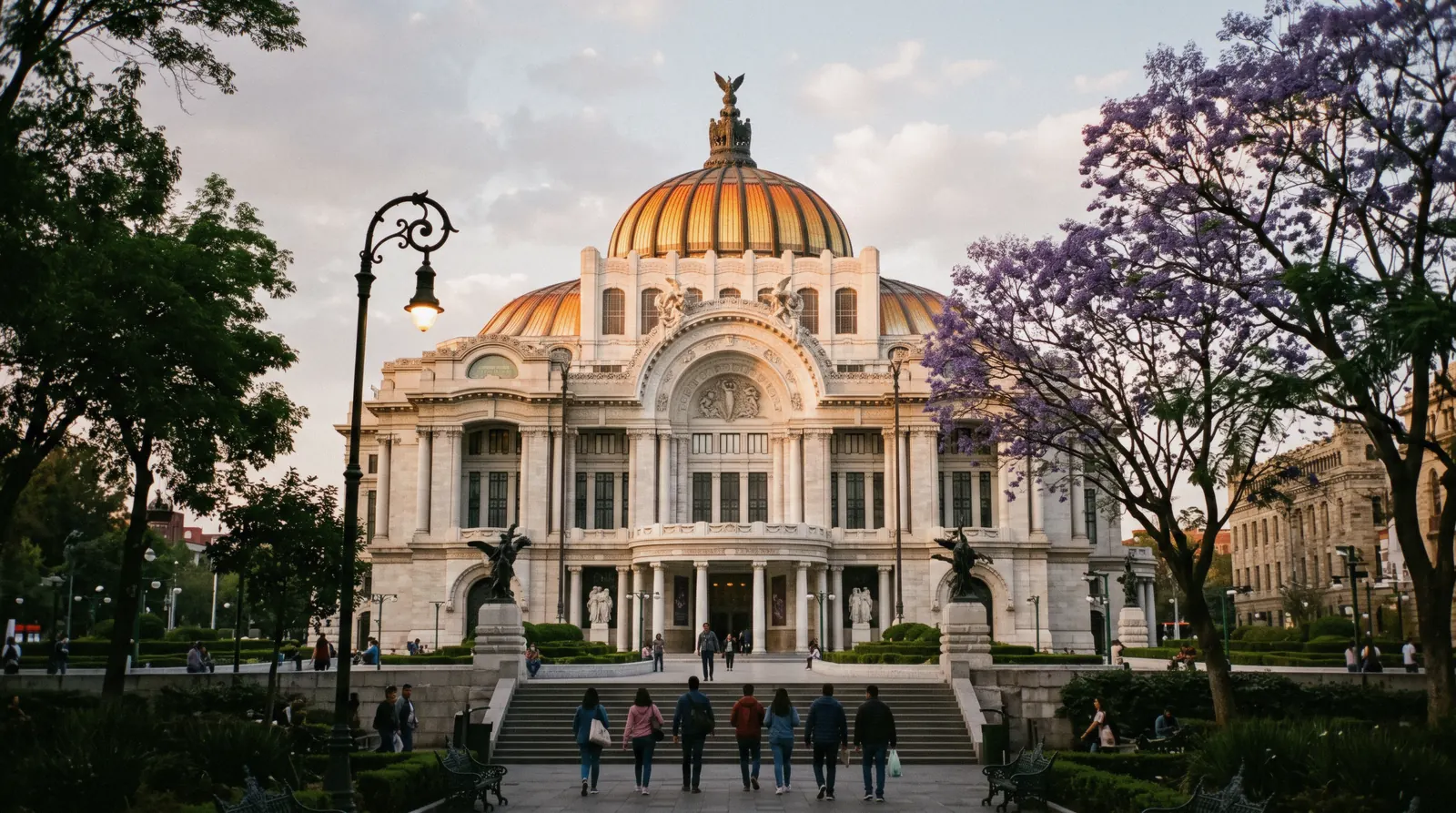
Palacio de Bellas Artes
The Palacio de Bellas Artes is the building Mexico City puts on its postcards: white Carrara marble and an orange-tiled dome outside, Art Deco in coloured stone inside, and on the upper floors the largest gathering of Mexican muralists under one roof — Rivera, Orozco, Siqueiros and Tamayo, in rooms you can cross in twenty minutes. The museum charges MX$95 and is free on Sundays to everyone, which makes it the one genuinely universal free day in this guide. Hours and prices read on INBAL's own listing on 30 August 2026.
Quick answer What is inside, what it costs, and the two things people miss
The museum inside the Palacio de Bellas Artes opens Tuesday to Sunday, 10:00 to 18:00, closes on Mondays, and charges MX$95 — about US$5.60 — with free entry on Sundays for everyone, whatever your nationality. The murals on the second and third floors are what you are paying for.
Key takeaways
- Four muralists in one place: Rivera's Man, Controller of the Universe, repainted here after Rockefeller destroyed the New York original, plus Orozco, Siqueiros and Tamayo — the mural floor is a one-hour visit
- The free Sunday here applies to everyone, unlike the INAH museums where it covers nationals and residents only
- The theatre is a separate ticket: the Ballet Folklórico sells galería seats from MX$350 through the venue's own cartelera
- The famous photograph of the dome is taken from the terrace café across Eje Central, not from inside the building
- It is also the cheapest of the big-ticket sights in the Mexico City city guide, and the only one with a free day that includes you
Key facts
Opening hours
| Tuesday to Sunday | 10:00–18:00 |
|---|
Closed Mondays
Admission
- Adult
- MX$95 (about US$5.60)
- Free
- Sundays for everyone; students and teachers with credential, INAPAM over-60s, children under 13
Planning it
- Time needed
- Not stated by the museum; our routing: 1 hour for the murals, 90 minutes with the temporary shows
- Book ahead
- Optional — walk-up usually fine
- Address
- Av. Juárez s/n, Centro Histórico, 06050 Ciudad de México
What It Costs To Go In
INBAL's own price for the museum, read on its listing on 30 August 2026, beside the guided walks that include the building. The performance tickets are a separate matter and are covered below.
| Option | Price | Includes | Cancel | Book |
|---|---|---|---|---|
| Museum entry at the door | MX$95 (about US$5.60) | The mural floors and the temporary exhibitions | Not stated | Official site |
| Sunday | Free | The same, for everyone | — | Official site |
| Historic-centre walking tour | Listed at $27.01 | Three hours on foot past the palace; entry not included | Free up to 24 hours before | Check Availability |
The ground-floor lobby and the bookshop can be walked through without a museum ticket, which is enough to see the Art Deco ironwork but not the murals.
Guided Walks That Pass The Palace
Where the Centro's history is the product. Prices as listed on 30 August 2026.
 from $27.01
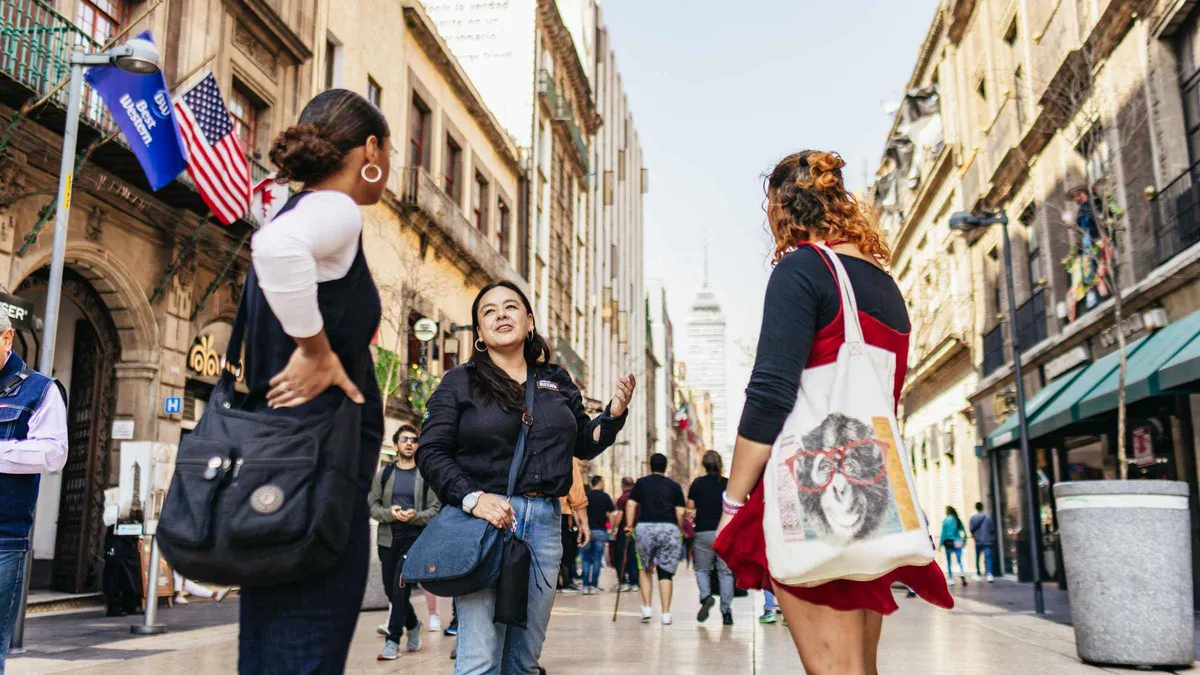
Mexico City: Historic Downtown Walking Tour
Listing details checked 2026-08-30
Three hours on foot through the Zócalo, Bellas Artes and the streets between them, with the history attached.
Check Availability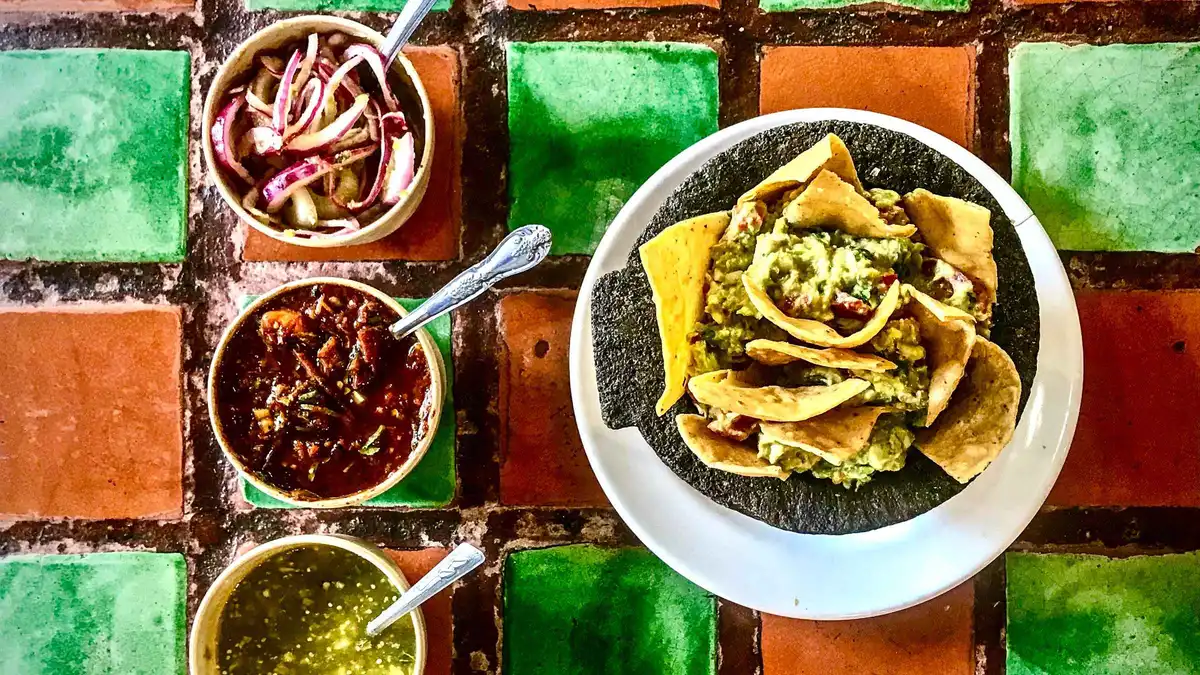 from $88.10
Mexico City: Old Town Food Tour of 7 Tastings & Secret Dish
Listing details checked 2026-08-30
Seven tastings through the Centro Histórico, ending with you able to order for yourself.
Check Availability from $65
Mexico City: Mexican Evening, Lucha Libre and Tequila
Listing details checked 2026-08-30
Ringside evening at the lucha libre with tequila and a guide who explains the rules and the theatre.
Check AvailabilityThe Building: Thirty Years, Two Architects, And A Sinking Foundation
The palace explains the city's ground better than any museum label does.
Porfirio Díaz commissioned a new national theatre for the centenary of independence and gave it to the Italian architect Adamo Boari in 1904. Boari designed an Art Nouveau palace in Carrara marble, and then the ground gave way: the structure, standing on the soft bed of the drained lake, began sinking under its own weight. Work slowed, the Revolution broke out in 1910, Boari left, and the shell stood unfinished for two decades.
Federico Mariscal completed it between 1930 and 1934 in the style of that moment, which is why the building changes language as you walk in: Art Nouveau marble outside, Art Deco in coloured Mexican stone inside, with geometric masks and ironwork that belong to a different decade from the facade. It opened in 1934, twenty-nine years after it was begun, and it has gone on sinking — the entrance is now several steps below the level of the street it was built to face.
The glass curtain
The theatre's fire curtain is a stained-glass panel of the two volcanoes, Popocatépetl and Iztaccíhuatl, assembled by Tiffany Studios in New York from nearly a million pieces. It is lowered before performances and shown at some guided sessions; it is not on view to museum visitors as a matter of course, which is the single most common disappointment reported here.
The Mural Floor, Painting By Painting
Seven works by four painters, on two upper levels, and the argument between them is the point.
*Diego Rivera, Man, Controller of the Universe (1934).* The most famous thing in the building, and a reconstruction: Rivera painted the original for the Rockefeller Center in New York in 1933, included a portrait of Lenin, refused to remove it, and the fresco was destroyed. He repainted it here the following year, larger and less diplomatic. Look for the two halves of the composition — capitalism and socialism — and for the portraits of Rockefeller and Trotsky facing each other across it.
*José Clemente Orozco, Katharsis (1934).* A machine-age vision of destruction, the counter-argument to Rivera's faith in progress. Orozco is the darkest of the muralists and the least quoted; standing between the two of them is what makes this floor worth the MX$95.
David Alfaro Siqueiros, whose panels here — including New Democracy — use the foreshortening and industrial paint he experimented with all his life; the figures lunge out of the wall. And Rufino Tamayo, whose two works are the quietest and most abstract, and the reason the floor does not read as a single political statement.
An hour covers the murals properly. The temporary exhibition halls on the same floors are worth another thirty minutes if the show is good — they have held major international retrospectives — and the museum publishes what is on through INBAL's own listing rather than a fixed calendar.
Seeing A Performance: The Ballet Folklórico And The Rest
The theatre is the other half of the building, and it is sold separately from the museum.
The Ballet Folklórico de México de Amalia Hernández has performed in this hall since the 1950s: regional dances staged with an orchestra, in a theatre most audiences would pay to sit in regardless of what was on it.
| Seat | Price | About | Note |
|---|---|---|---|
| Luneta (stalls) | MX$1,400 | US$82 | The venue's own listing |
| Anfiteatro | MX$1,200 | US$71 | Mid-level |
| Galería | MX$350 | US$21 | The cheapest way into the building for an evening |
| Mexican families | 20% off | — | Discount stated by the venue |
| Thursday 2-for-1 on Ticketmaster | — | — | Applies to the Sunday 09:30 performance |
Performance days move month to month, so read the venue's cartelera rather than any fixed timetable, including ours. Tickets go through Ticketmaster with handling fees on top. The palace also programmes opera, the national symphony and visiting companies — the same hall, the same glass curtain, usually cheaper.
The Free Sunday That Actually Includes You
One line worth repeating, because the rest of the city's free days do not work this way.
INBAL's listing for this museum states free entry on Sundays for the whole public — domingos entrada libre a todo público — with no nationality or residency test. That is different from the INAH museums — Anthropology, Chapultepec Castle, the Templo Mayor, Teotihuacán — where Sunday is free only for Mexican nationals and foreign residents.
So if you are a visiting foreigner building a Sunday, this is the museum to build it around: MX$95 saved, the mural floor at its busiest but still walkable, and the rest of the Centro Histórico free anyway. Free entry also applies any day to students and teachers with a current credential, over-60s with an INAPAM card, and children under 13.
The Photograph Everyone Takes, And Where It Is Taken From
Not from the palace. From a café terrace on the eighth floor across the road.
The view down onto the tiled dome, with the Torre Latinoamericana behind it, is shot from the terrace of the café on the upper floor of the department store on the corner of Eje Central and Avenida Juárez. Entry is free, you are expected to buy a coffee, and the queue for the terrace runs longest between five and seven in the evening when the light is best. Go up before the light rather than during it.
The other elevated view is from the Torre Latinoamericana observation deck, which is higher, further away and charges MX$220. Between the two, the free terrace has the better composition and the tower has the better sense of the city's size. The Alameda Central park across Juárez gives the whole facade from ground level, which is where the marble reads best in the morning.
Bellas Artes And What Is Around It
The palace, the terrace with the view, the tower, the park and the metro.
Next Stop From Bellas Artes
Walk minutes are our estimates from the GPS distances.
Zócalo
Down Avenida Madero, pedestrianised the whole way, to the main square, the cathedral and the Templo Mayor.
12 min walk eastTorre Latinoamericana
The 44th-floor deck across the road, MX$220, and the widest view of the centre.
3 min walkCentro Histórico
What else is worth the walk in the district, and where to eat between the buildings.
You are in itPalacio de Bellas Artes Questions
How much does it cost to enter the Palacio de Bellas Artes?
The museum charges MX$95, about US$5.60, and is free on Sundays to everyone, whatever your nationality. Students and teachers with a current credential, over-60s with an INAPAM card and children under 13 enter free on any open day. The lobby and bookshop can be seen without a ticket; the murals cannot.
What is the most important thing in the Palacio de Bellas Artes?
Diego Rivera's Man, Controller of the Universe — the mural he repainted here in 1934 after the Rockefeller Center original was destroyed over its portrait of Lenin. It hangs on the mural floor alongside Orozco's Katharsis, panels by Siqueiros and two works by Tamayo. The full mural floor is above.
What are the Palacio de Bellas Artes opening hours?
The museum opens Tuesday to Sunday, 10:00 to 18:00, and closes on Mondays like most museums in the city. Performances in the theatre run outside those hours and are ticketed separately through the venue's own cartelera.
Can I see the Tiffany glass curtain?
Not as a museum visitor, as a rule. The stained-glass curtain of the two volcanoes, assembled by Tiffany Studios from nearly a million pieces, is lowered for performances and shown at some guided sessions rather than during ordinary museum hours. Booking a performance is the reliable way to see it.
How do I get tickets for the Ballet Folklórico?
Through the venue's own cartelera and Ticketmaster. The venue lists seats at MX$1,400 in the luneta, MX$1,200 in the amphitheatre and MX$350 in the galería, with 20% off for Mexican families and a Thursday two-for-one on Ticketmaster that applies to the Sunday 09:30 show. Performance days change monthly — the detail is above.
Is the Palacio de Bellas Artes sinking?
Yes, and visibly: it stands on the drained bed of Lake Texcoco, began sinking during construction after 1904, and its entrance now sits several steps below the street it was built to face. The building's history explains why it took twenty-nine years and two architects to finish.
Where This Fits In A Day
It is the western end of a Centro morning, and the best hour of it is the last one.
Walk from the Zócalo down Madero — twelve minutes, pedestrianised — and take the museum before lunch, when the mural floor is quiet. Afterwards the Torre Latinoamericana is three minutes away and the Alameda is across the road.
If you can arrange it, come back at dusk: the terrace café across Eje Central gives the dome in the last light, and the palace is floodlit from the outside afterwards. On a Sunday, do the reverse — get here at opening while it is free, then let the crowd arrive behind you. The whole first day is on the one-day itinerary, and the rest of the trip on the independent Mexico City guide.
The Palace On Film
Three walk-throughs of the building, the murals and the view of the dome.
Mexico City travel guide 2026
Includes the palace and the Centro at street level.
Video: Martijn Around The WorldMexico City tips for first timers
Practical points for a first day in the Centro.
Video: Happy to WanderHow to travel CDMX
Reaching Bellas Artes on the Metro, and what it costs.
Video: Wanderlust WellmanVideos load from YouTube only when you press play.
Page last reviewed 2026-08-30. Prices, hours and terms are set by the venue or operator and confirmed at checkout.
We may earn a commission if you book through one of our links, at no extra cost to you. Full affiliate disclosure