 Visit Mexico City Guide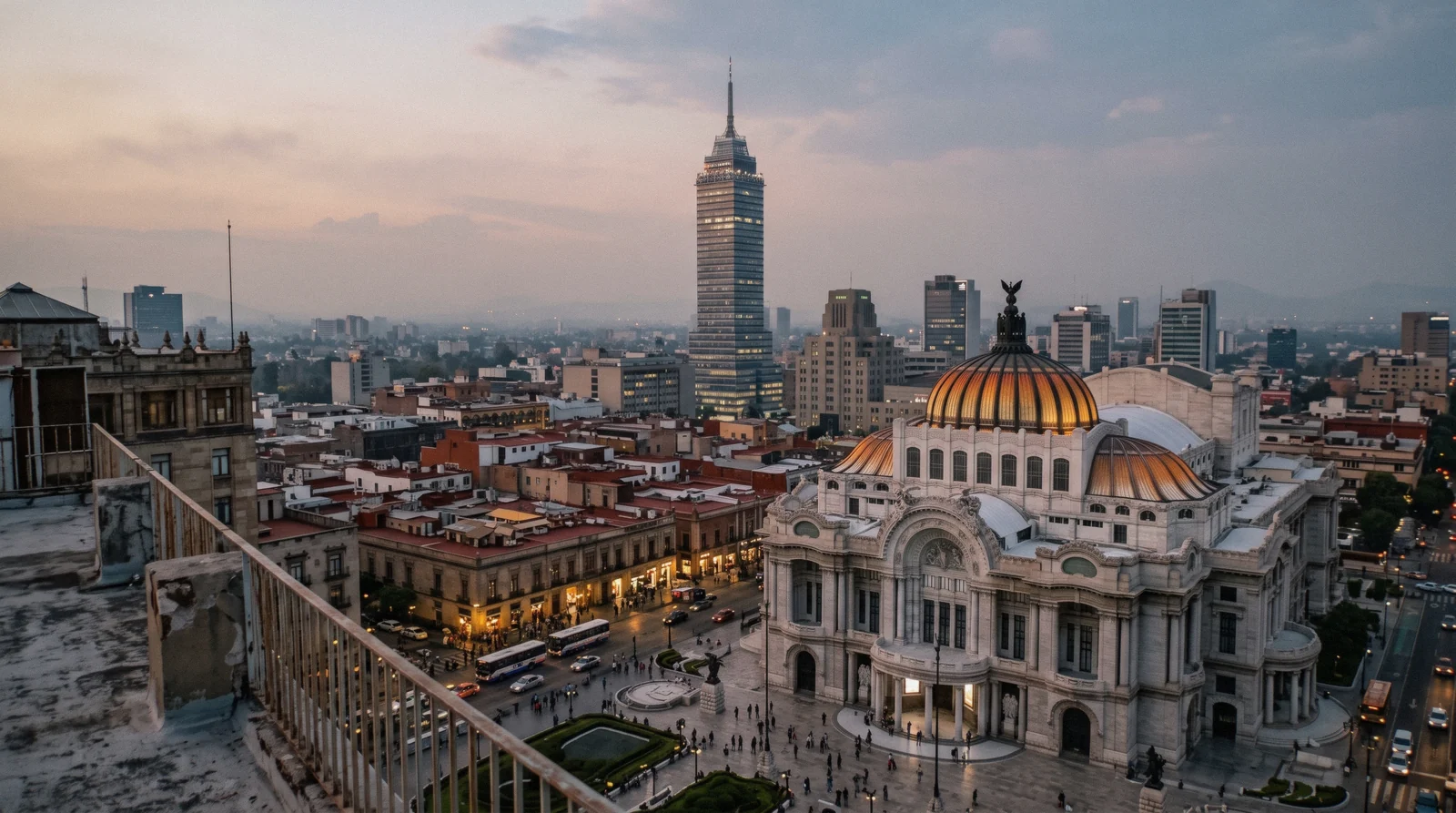
Torre Latinoamericana
The Torre Latinoamericana is the 1956 skyscraper on the corner of Eje Central and Madero that made the city believe it could build tall on a lake bed — 182 metres, 44 floors, and the first major tower anywhere designed to survive a serious earthquake, which it did in 1957, in 1985 and in 2017. The public deck is on the 44th floor and the reason to go up is not the building but the geography: the valley, the volcanoes on a clear day, and the Palacio de Bellas Artes dome directly below. Prices and hours read on the operator's own ticket page on 30 August 2026.
Quick answer What it costs, when to go up, and whether it beats the free option
The observation deck on the 44th floor costs MX$220 for an adult and MX$170 for a child aged 4 to 11, and the tower is open 09:00 to 22:00 every day of the year. There is no timed entry and no need to book; 45 minutes covers the lifts, the deck and the photographs.
Key takeaways
- Three bands: deck only at MX$220, the 3-in-1 with the museums at MX$260, or the Bicentennial Museum alone at MX$40 with no view at all
- The free alternative is the terrace café across Eje Central, which has the better composition of the Bellas Artes dome but not the height
- Late afternoon into dusk is the hour worth queueing for; the tower is one of the few sights in this guide open late and open on a Monday
- It is three minutes from Bellas Artes and twelve from the Zócalo, so it slots into a Centro day without a detour
- Where the deck fits an evening is on the guide to visiting Mexico City
Key facts
Opening hours
| Every day, all year | 09:00–22:00 |
|---|
Closed None — the operator states 365 days a year
Admission
- Adult
- MX$220 (about US$12.95) for the observation deck
- Reduced
- MX$170 children 4–11; the 3-in-1 with the museums MX$260 adult / MX$190 child
- Free
- None stated
Planning it
- Time needed
- Not stated by the operator; our routing: 45 minutes including the lifts
- Book ahead
- Optional — walk-up usually fine
- Address
- Eje Central Lázaro Cárdenas 2, Centro Histórico, 06000 Ciudad de México
The Three Ticket Bands
Read on the operator's own ticket page on 30 August 2026 and converted at US$1 = MX$17.0. The first row is the operator's own shop and carries no tracking of ours; note what the cheapest band does not include.
| Ticket | Adult | Child 4–11 | What it covers | Book |
|---|---|---|---|---|
| Observation deck (Mirador) | MX$220 (about US$12.95) | MX$170 | The 44th-floor deck and the lifts | Official site |
| 3 in 1: deck and museums | MX$260 | MX$190 | The deck plus the Bicentennial Museum and the tower's own exhibition | Official site |
| Bicentennial Museum only | MX$40 | MX$20 (also seniors) | Level 36, and the operator states plainly: no panoramic views | Official site |
Buying online lets you use the check-in line rather than the ticket queue, which matters only at sunset. The MX$40 museum-only band is a trap if what you came for is the view — it does not include the deck.
Centro Walks That Pass The Tower
The tower sells its own tickets; these are the guided options for the streets around it. Prices as listed on 30 August 2026.
 from $27.01
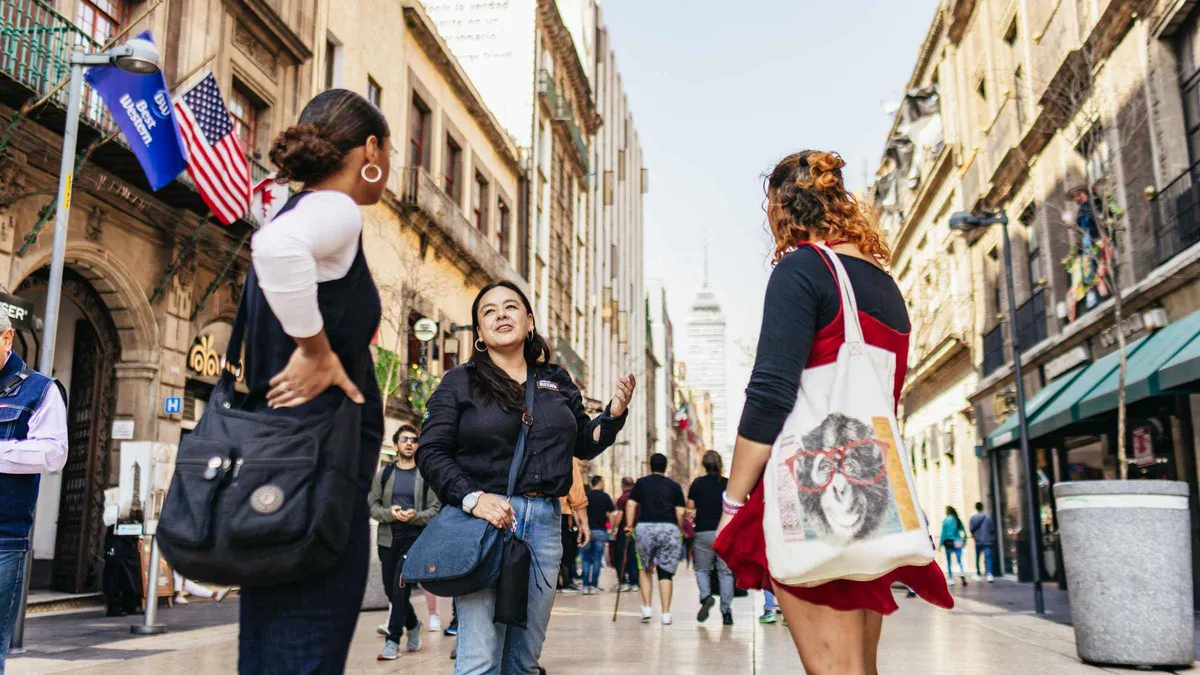
Mexico City: Historic Downtown Walking Tour
Listing details checked 2026-08-30
Three hours on foot through the Zócalo, Bellas Artes and the streets between them, with the history attached.
Check Availability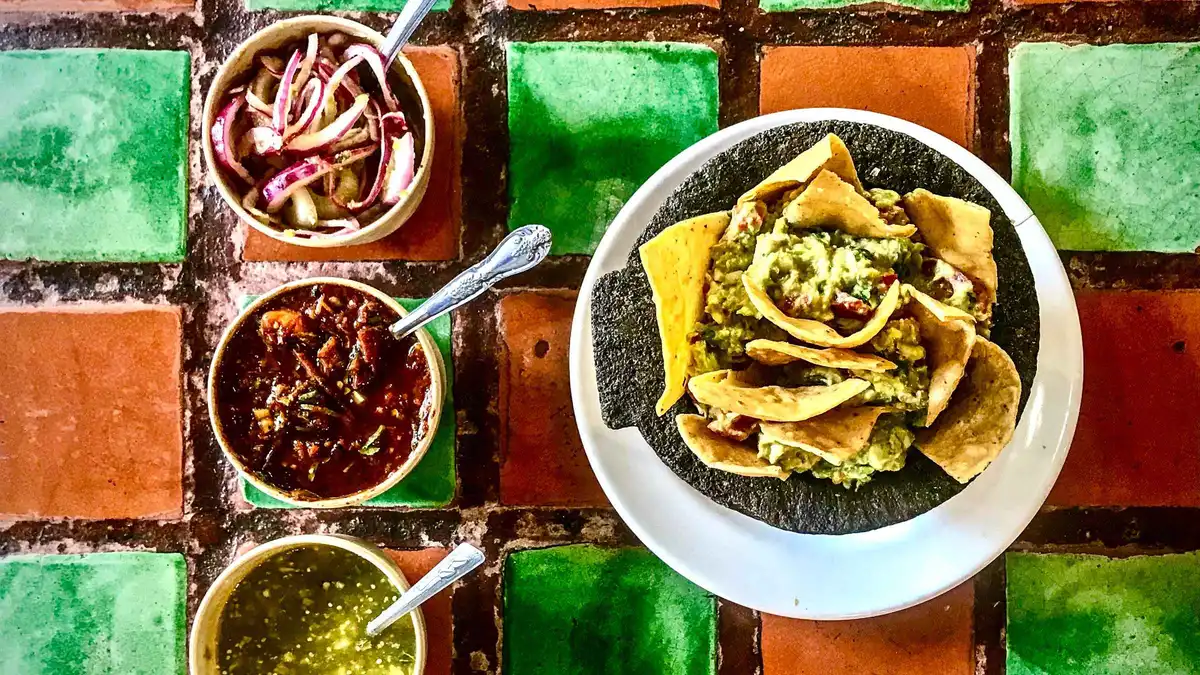 from $88.10
Mexico City: Old Town Food Tour of 7 Tastings & Secret Dish
Listing details checked 2026-08-30
Seven tastings through the Centro Histórico, ending with you able to order for yourself.
Check Availability from $65
Mexico City: Mexican Evening, Lucha Libre and Tequila
Listing details checked 2026-08-30
Ringside evening at the lucha libre with tequila and a guide who explains the rules and the theatre.
Check AvailabilityWhy This Building Matters, Beyond The View
It is the reason the rest of the skyline exists.
When it was finished in 1956 the accepted wisdom was that you could not build tall on the soft, water-saturated bed of Lake Texcoco. Augusto H. Álvarez's design floated the tower on a raft of concrete over more than 300 friction piles driven into the clay, with a steel frame designed to sway rather than resist. It was the tallest building in Latin America for a decade and, for a while, the tallest anywhere on ground this bad.
The engineering was tested almost immediately. The tower came through the 1957 earthquake undamaged, through the catastrophic 1985 earthquake — which flattened much of the centre and killed thousands — with no structural damage, and through 2017 again. That record is why the building is on this page at all: it is the single most persuasive object in the city about what the ground here is and what it does.
How tall it actually is
182 metres to the roof, 204 to the tip of the antenna, 44 floors above ground. It is no longer the tallest in the city — the Torre Reforma and others in the Reforma corridor overtook it — but it is the tallest thing standing in the middle of the historic centre, which is what makes the view from it the one worth paying for.
What You See From The 44th Floor
Four directions, and the one that surprises people.
East is the Zócalo, the cathedral and the Palacio Nacional, laid out as a plan — the clearest way to understand how the colonial grid sits over the Mexica island. West is Alameda Central and the Reforma corridor with the modern towers. North is the endless low-rise city, and on a clear morning the two volcanoes, Popocatépetl and Iztaccíhuatl, over the eastern rim of the valley.
Straight down is the Palacio de Bellas Artes with its tiled dome, and this is the surprise: from up here the palace reads as a small object in a huge grey field, which is a truer picture of the city than the postcard. The other surprise is the scale — the valley floor is 60 kilometres across and the city fills it to the mountains in every direction. Nothing at street level prepares you for that.
Air quality decides how much of it you get. The clearest months are the rainy ones, June to September, when the afternoon storms wash the valley — go in the morning before the clouds build. The worst are the dry, still weeks of February to May, when the haze can close the volcanoes entirely; the season page has the pattern.
When To Go Up
The tower is open longer than anything else in this guide, which is most of its advantage.
Open 09:00 to 22:00, every day of the year — including the Mondays when the museums close and the evenings when the Centro has otherwise run out of things to do.
| When | What it is like | Worth it for |
|---|---|---|
| 09:00–11:00 | Empty, clearest air in the rainy season | The volcanoes, if they are out |
| Midday | Flat light, thin crowd | A quick orientation stop |
| An hour before sunset | Filling up; the queue starts | The light on the buildings |
| Sunset itself | The busiest hour of the day | The photograph everyone wants |
| After 20:00 | Quiet again | The lit city, and the deck almost to yourself |
A practical note: the lifts go to 37, where the ticket check is, and a second lift or the stairs take you up to the deck. Bags are checked. There is a café on the way, and it is priced for a tower.
The Free Alternative, And When It Is Better
Two viewpoints, one paid and one free, and they are not looking at the same thing.
The terrace café on the upper floor of the department store across Eje Central charges nothing to go up — you buy a coffee — and it is the source of the famous photograph of the Bellas Artes dome with the tower behind it. It is eight floors up rather than forty-four, so the composition is better and the geography is worse.
The rule of thumb: for the dome photograph, take the free terrace. For the city — the valley, the volcanoes, the grid — pay the MX$220 and go up the tower. Doing both in one afternoon takes about ninety minutes and costs the price of one deck ticket and one coffee, which is the answer most visitors want. The Bellas Artes page has the terrace detail.
Torre Latinoamericana Map
The tower, the free terrace opposite, and the two sights within twelve minutes.
Next Stop From The Tower
Walk minutes are our estimates from the GPS distances.
Palacio de Bellas Artes
The dome you have just looked down on, with the mural floor inside — MX$95, and free on Sundays to everyone.
3 min walkZócalo
Down Madero, pedestrianised the whole way, to the square, the cathedral and the Templo Mayor.
12 min walk eastCentro Histórico
What else is worth the walk, and where to eat within five minutes of the tower.
You are in itTorre Latinoamericana Questions
How much does it cost to go up the Torre Latinoamericana?
MX$220 for an adult and MX$170 for a child aged 4 to 11 for the 44th-floor deck, on the operator's own ticket page. A 3-in-1 ticket with the museums is MX$260 adult and MX$190 child, and the Bicentennial Museum alone is MX$40 — with, in the operator's own words, no panoramic views. The three bands are compared above.
How tall is the Torre Latinoamericana?
182 metres to the roof and 204 to the tip of the antenna, over 44 floors. It was the tallest building in Latin America when it opened in 1956, and it is still the tallest in the middle of the historic centre, which is what makes the view from it worth the ticket.
What is inside the Torre Latinoamericana?
Offices on most floors, the Bicentennial Museum on level 36, a café on the way up and the public deck on 44. The 3-in-1 ticket covers the museum and the tower's own exhibition about the building and the earthquakes it has survived; the deck-only ticket covers none of that.
What are the Torre Latinoamericana opening hours?
09:00 to 22:00, and the operator states it is open 365 days a year — which makes it one of the few things in this guide open on a Monday and after dark. There is no timed entry; buying online only lets you skip the ticket queue.
Is the Torre Latinoamericana worth it?
For the city, yes: it is the only high viewpoint in the middle of the historic centre, and the valley reads from up there in a way it never does at street level. For the famous photograph of the Bellas Artes dome, no — the free terrace across the road has the better composition. Many visitors do both in an afternoon.
Did the tower survive the earthquakes?
Yes, all of them: 1957, the catastrophic 1985 earthquake that destroyed much of the centre, and 2017. It was engineered to sway on a raft over more than 300 piles driven into the lake clay, and its record is the reason the rest of the modern skyline exists. The engineering story is above.
Where This Fits In A Day
It is a 45-minute stop, and the hour you take it in is the whole decision.
Put it at the end of a Centro day: Zócalo and Templo Mayor in the morning, Bellas Artes after lunch, the free terrace for the dome at about six, and the tower deck as the lights come on. Nothing else in the centre stays open that late.
On a Monday, when the museums are shut, invert it: the tower and the Basílica are open, and the Monday page has the rest. Where the whole trip goes is on the independent Mexico City guide.
The View On Film
Three visitor videos from the deck, which show what the haze does on an average day better than any photograph.
600 feet above Mexico City
The lifts, the deck and a full turn around the horizon.
Video: Lincoln in the AdirondacksViews of Ciudad de México from the Torre Latinoamericana
A slow pan across the valley from the 44th floor.
Video: Visit PlacesLatin America Tower, Mexico City
The building itself and what is inside it.
Video: Hideout WaysVideos load from YouTube only when you press play.
Page last reviewed 2026-08-30. Prices, hours and terms are set by the venue or operator and confirmed at checkout.
We may earn a commission if you book through one of our links, at no extra cost to you. Full affiliate disclosure